Private Golden Circle & Laugarás Lagoon Tour
280.300 ISK
11 hours

Easy
12.805 ISK
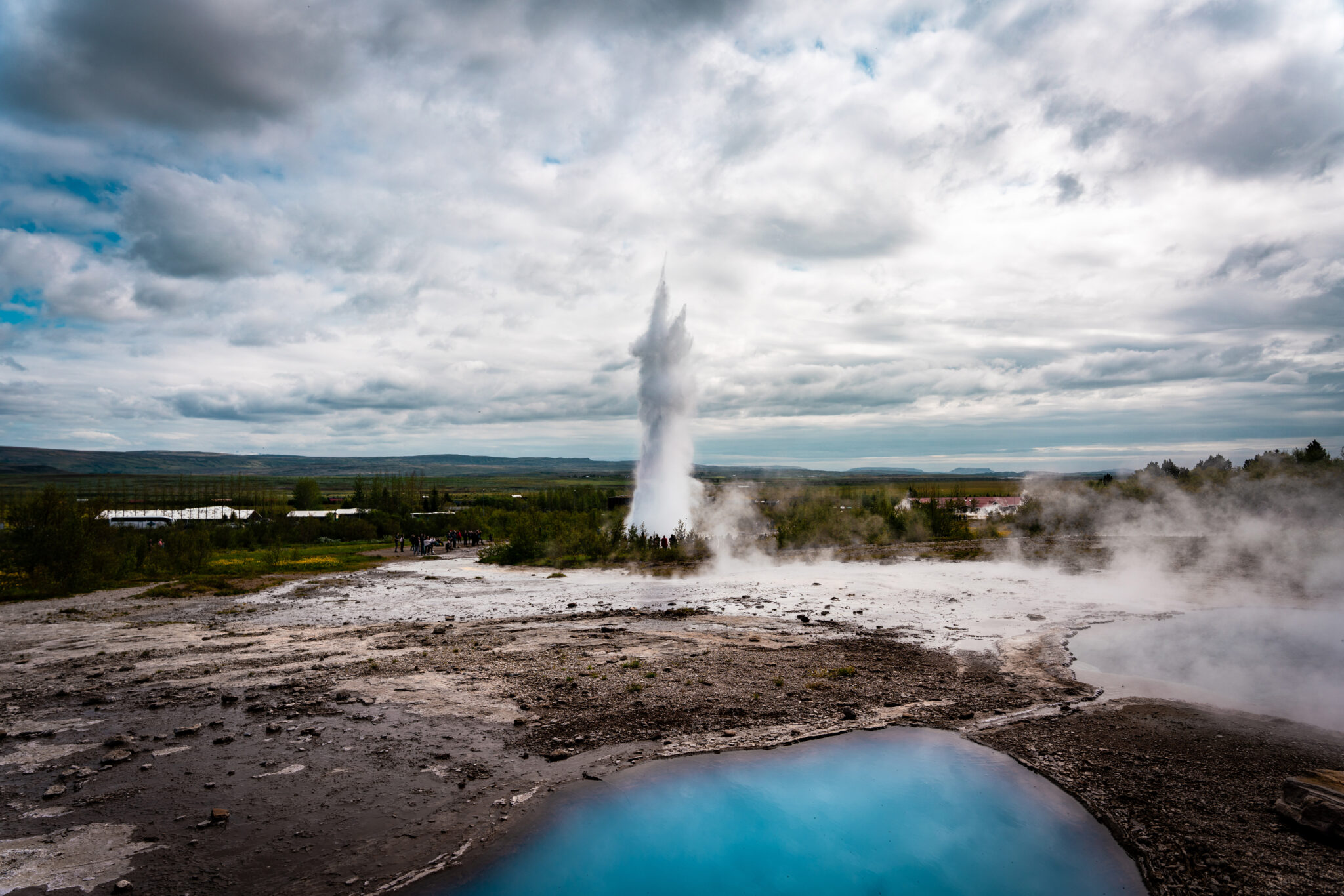
Experience Iceland’s iconic Golden Circle on this express guided day tour from Reykjavik — see the highlights in just 6.5 hours. Visit all three legendary stops: Þingvellir National Park (a UNESCO World Heritage Site), thundering Gullfoss waterfall, and the explosive Strokkur geyser at Geysir Geothermal Area — with a certified English-speaking local guide sharing stories of Viking history and Icelandic geology.
Travel in comfort on a modern coach with free Wi-Fi. Operated by Reykjavik Excursions, Iceland’s leading tour operator since 1968 (Tripadvisor Travelers’ Choice). Optional hotel pickup available at extra cost, starting 30 minutes before departure.
Audio guide available in 10 languages on your smartphone. Three daily departures (8:00am, 10:00am, 12:00pm) — all year round.
WiFi on board
Parking Fees
Hotel pickup from central Reykjavik
Professional certified English-speaking guide
Air-conditioned vehicle
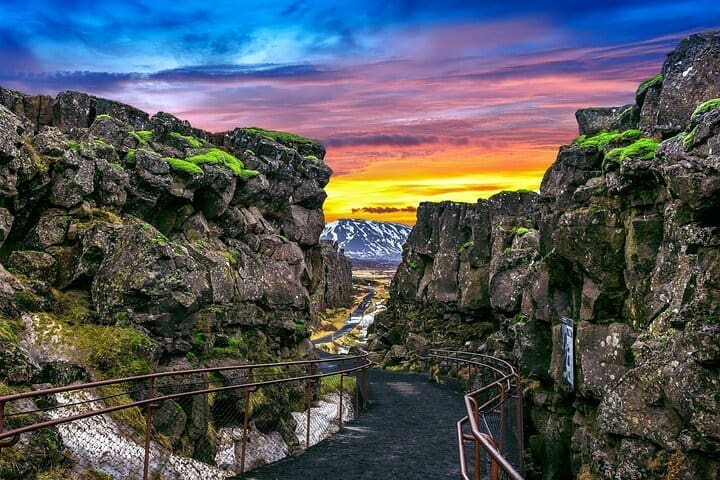
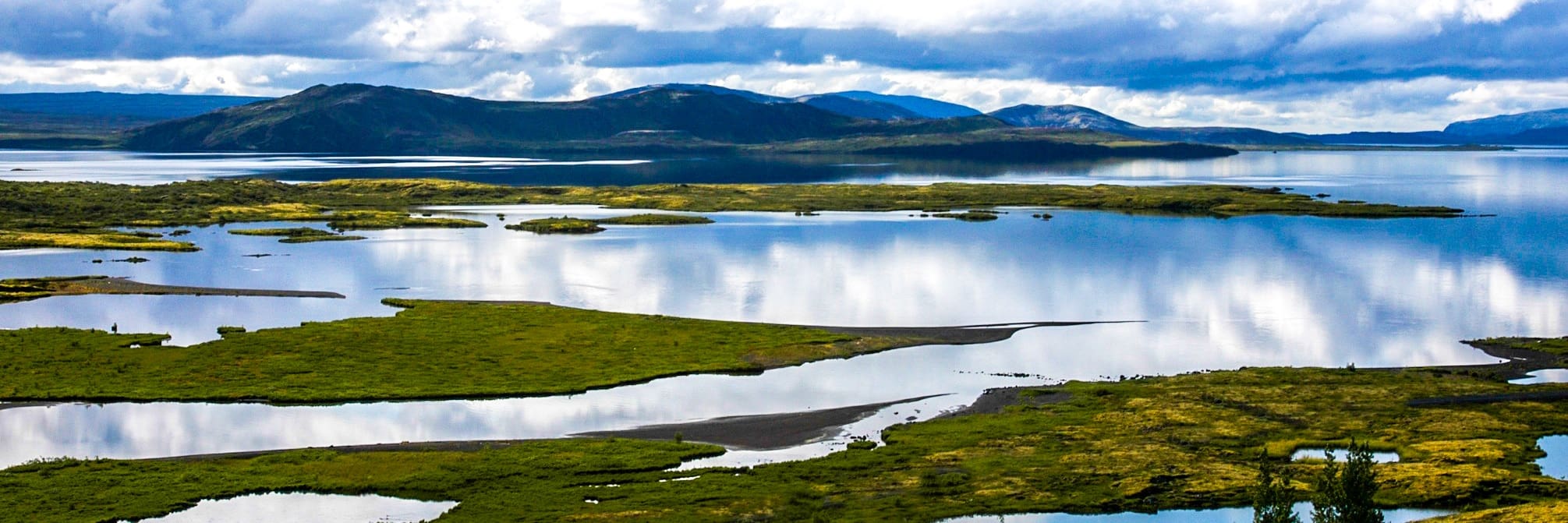
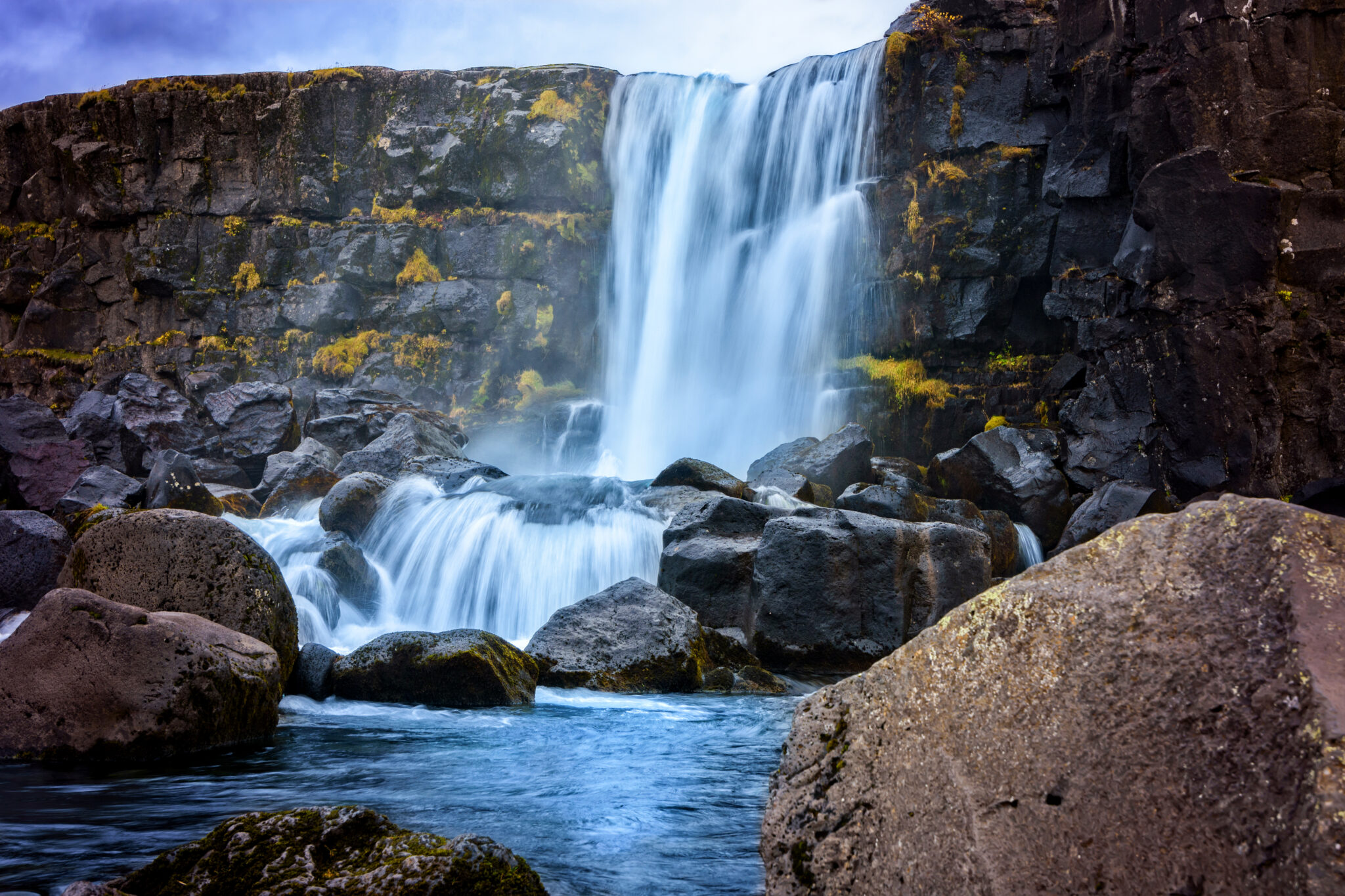
Þingvellir (Thingvellir) National Park is a treasured landmark in Iceland, standing as a remarkable representation of the country’s rich history, culture, and unique geology. Located just about 40 kilometers northeast of Reykjavik, it is nestled between the tectonic plates of North America and Eurasia, presenting a truly unique natural spectacle for its visitors.
The park is a vista of raw, riveting beauty, characterized by its dramatic fissures and faults, rugged cliffs, sparkling lakes, and sweeping fields of delicate Icelandic flora. One of the most prominent features is the Almannagjá gorge, a massive rift caused by the drifting apart of the tectonic plates. Another natural wonder, the crystal-clear Silfra fissure, attracts adventurers for diving and snorkeling experiences unparalleled in their visual clarity.
The park’s historical significance is equally captivating. Þingvellir is recognized as the birthplace of Icelandic democracy, where the first national parliament, or ‘Alþingi,’ was established in 930 AD. The ‘Lögberg,’ or Law Rock, marks the spot where the laws of the land were proclaimed, attracting scholars and history enthusiasts from across the globe.
Declared a UNESCO World Heritage site in 2004, Þingvellir National Park is more than just a national park; it’s a symbol of national unity, a testament to Iceland’s tumultuous geological past, and an emblem of the enduring power of nature. Whether you’re a history buff, a nature lover, or an adrenaline seeker, the allure of this park is undeniable. It is an essential stop for any visit to Iceland, offering a blend of history and natural beauty that is simply unmatched.
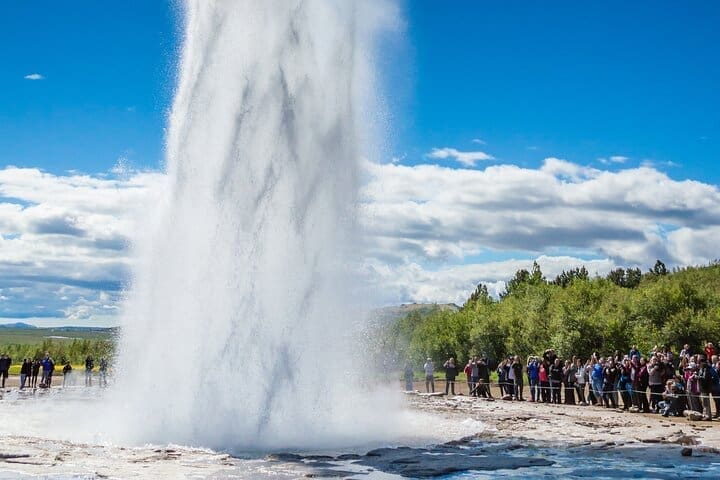
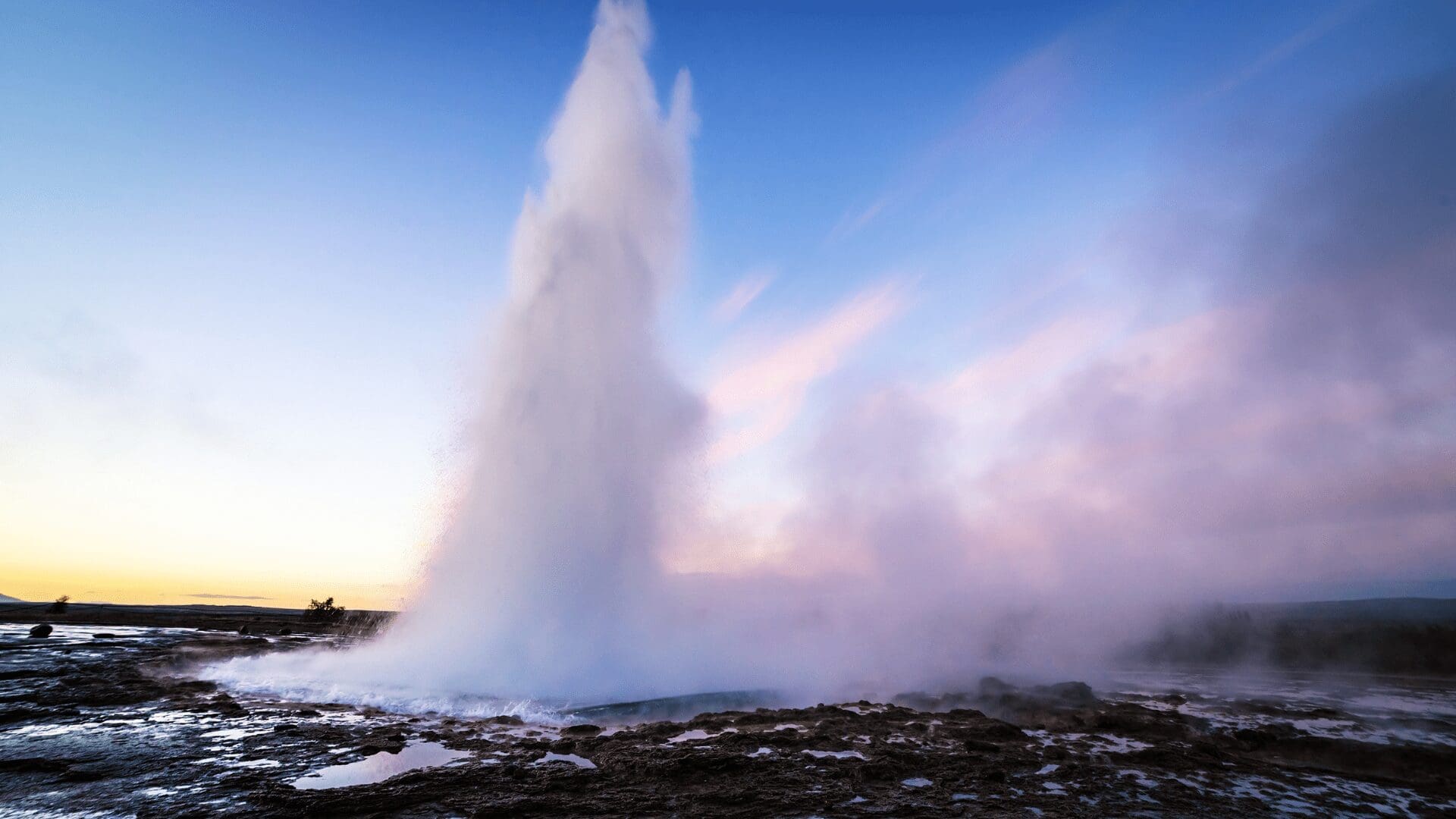
The Geysir Geothermal Area, located in the southwestern part of Iceland, is an enchanting region of geothermal activity, renowned worldwide for its erupting geysers, boiling mud pits, and steaming fumaroles. This surreal, almost lunar landscape sits in the Haukadalur valley, which is easily accessible and is part of the popular “Golden Circle” tourist route.
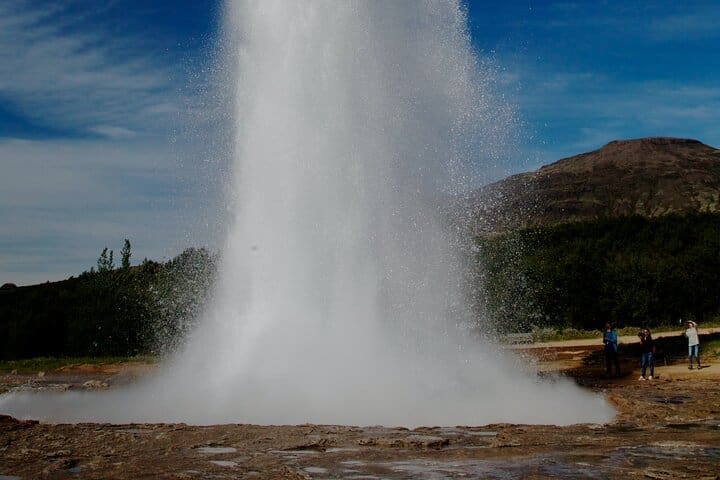
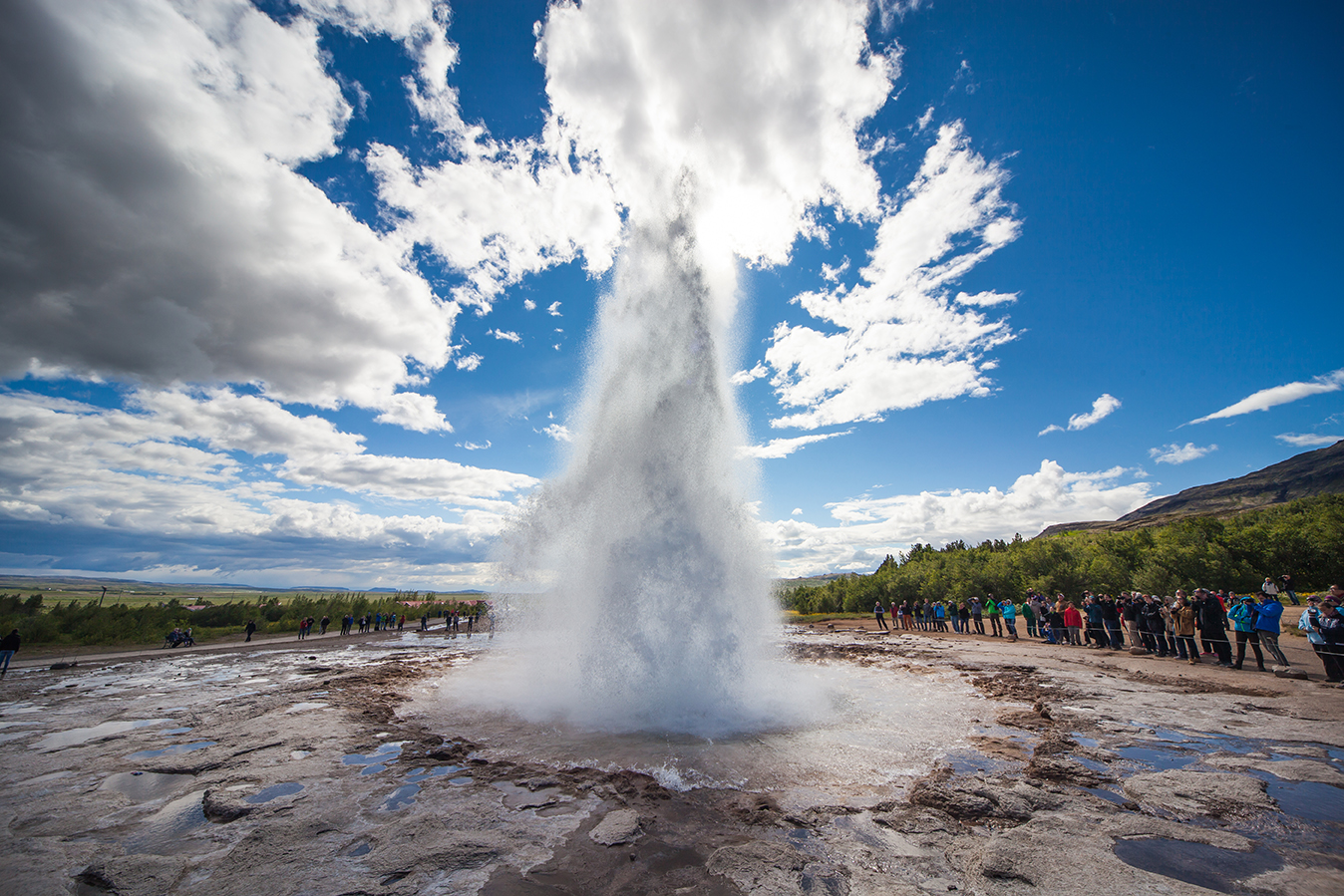
The most famous feature of the area is the “Great Geysir” itself, from which all other geysers around the world have taken their name. Although largely dormant today, the Great Geysir once shot boiling water and steam up to 70 meters into the air. Today, its nearby neighbor, “Strokkur,” provides regular eruptions every 5-10 minutes, reaching heights of 15-20 meters, much to the delight of onlookers.
The vivid colors of the Geysir area further enhance its otherworldly ambiance. The mineral-rich soil ranges from red to green, and the azure blue of the geothermal pools offers a stark contrast, creating a remarkable spectacle. The water in these pools can reach temperatures of 100°C (212°F), a testament to the power and energy simmering just beneath the earth’s crust.
Additionally, the Geysir Geothermal Area is dotted with informative plaques and displays. They provide intriguing insights into the geology behind the geothermal activity, ensuring that a visit here is not only an awe-inspiring experience, but also an educational one.
Whether it’s the allure of witnessing the raw power of an erupting geyser or the fascination of exploring a location that’s so dramatically alive, the Geysir Geothermal Area is a must-visit destination in Iceland. Its dynamic landscape serves as a reminder of our planet’s potent energy and ever-changing nature.
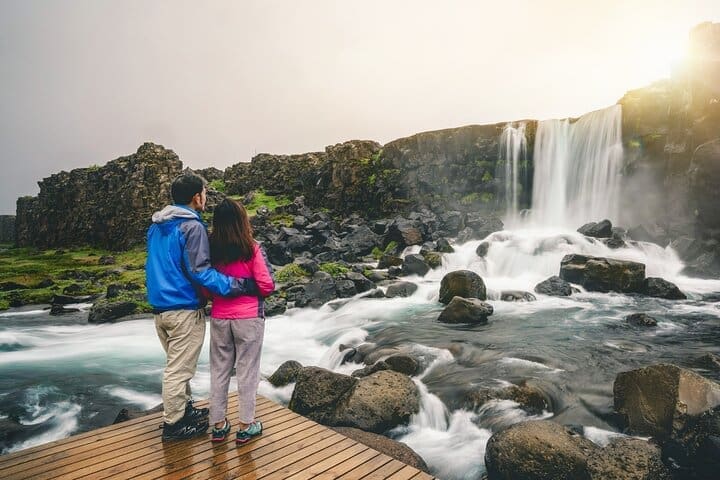
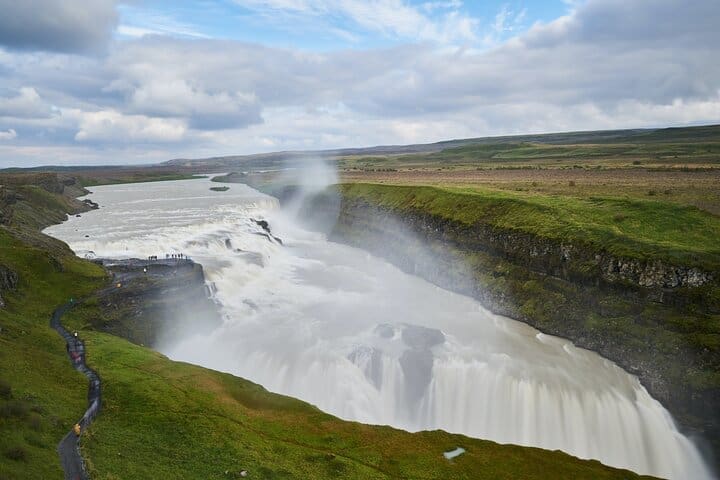
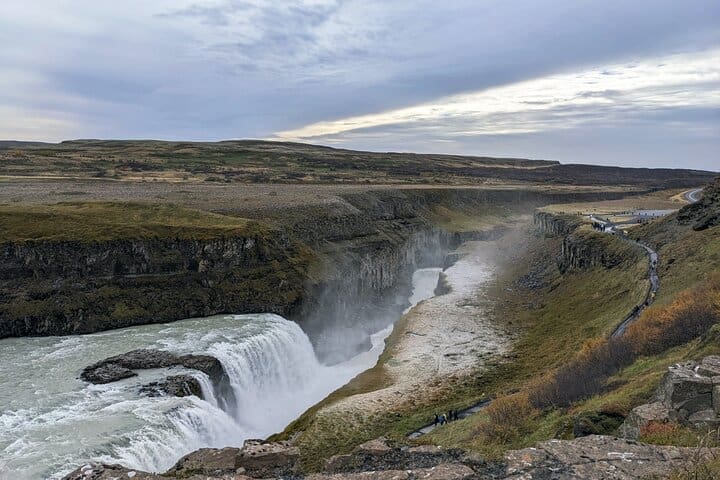
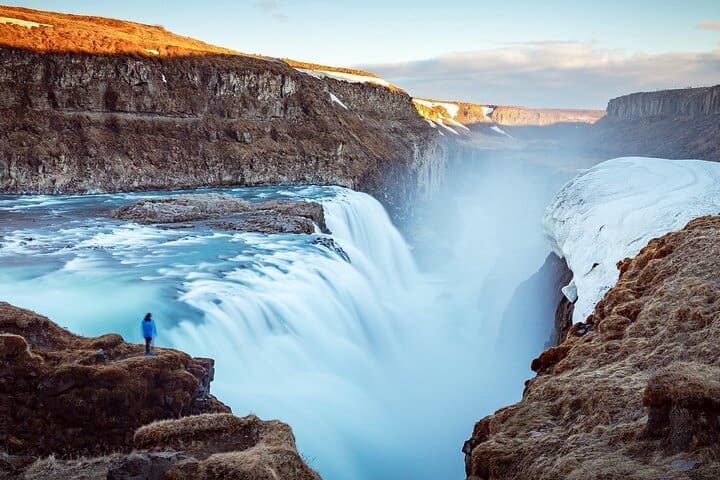
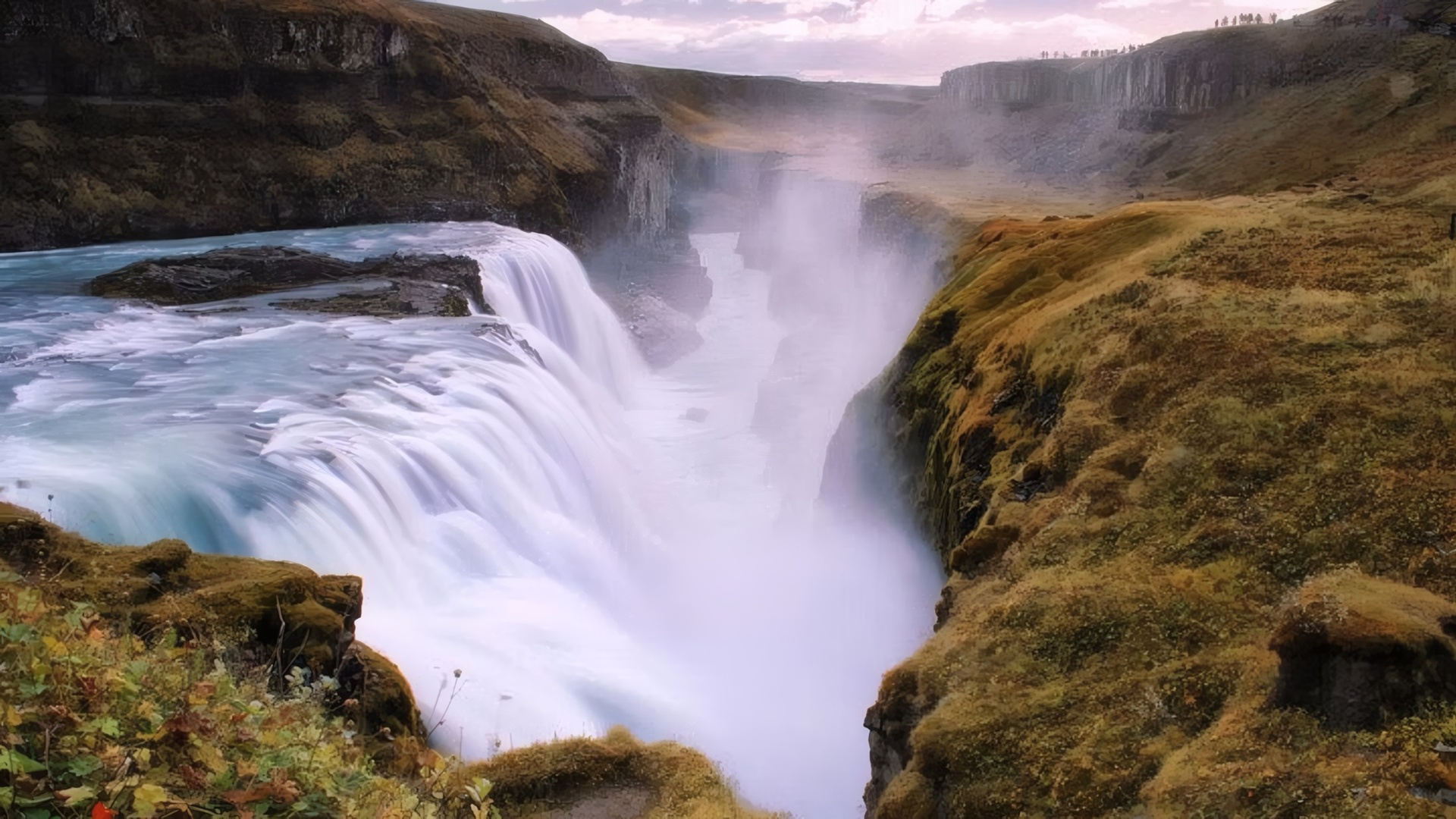
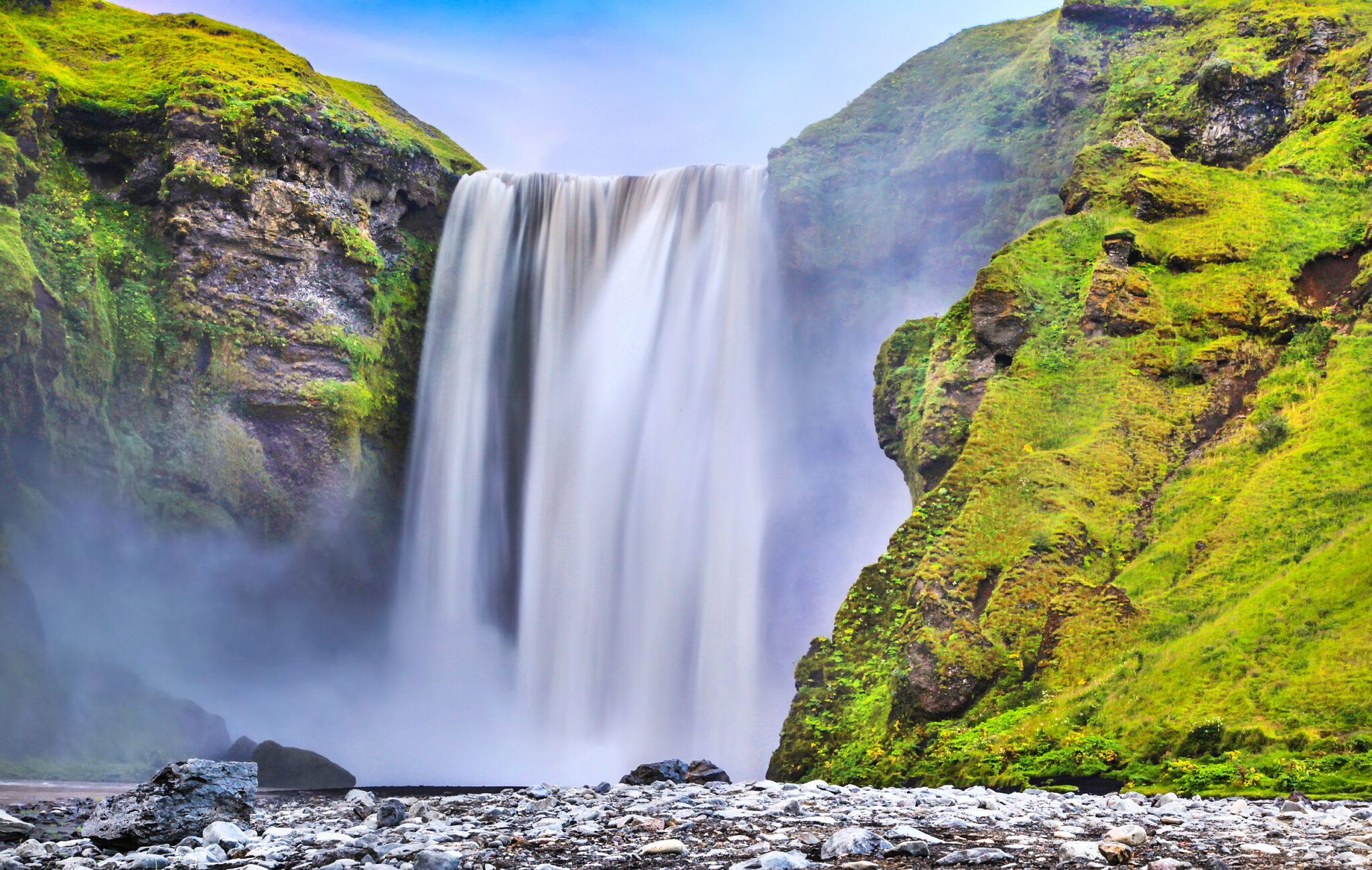
Gullfoss Waterfall, often referred to as the “Golden Falls,” is one of Iceland’s most iconic and beloved natural attractions. Located in the canyon of the Hvítá river in Southwest Iceland, it forms a part of the famed “Golden Circle” tour, alongside the Þingvellir National Park and the Geysir Geothermal Area.
The waterfall is a spectacular sight to behold, cascading in two tiers into a rugged canyon. The upper tier has a drop of 11 meters, and the lower one plunges a dramatic 21 meters. On sunny days, a shimmering rainbow often forms in the mist above the waterfall, lending a magical touch to the already breathtaking scene.
The power and majesty of Gullfoss are awe-inspiring. Approximately 140 cubic meters of water thunder down the waterfall per second in the summer, resulting in a spray that drenches the viewing platforms and offers a visceral experience of nature’s raw power.
The area surrounding Gullfoss also has an intriguing history. In the early 20th century, the waterfall was nearly used for a hydroelectric project that would have irrevocably altered its natural state. However, due to the steadfast efforts of Sigríður Tómasdóttir, the daughter of the owner, the waterfall was saved and later sold to the Icelandic government, securing its status as a protected natural monument.
Today, Gullfoss remains a symbol of both the beauty and power of nature, and of the resilience of individuals committed to preserving that beauty. With its thunderous roar, rainbow-laden mists, and raw, wild beauty, Gullfoss waterfall leaves an unforgettable impression on all who visit.
Explore the colorful Kerið volcanic crater, with its striking red slopes and crater lake.
TOUR WITH PICKUP: Hotel pickup is included. We collect travelers from most hotels, guesthouses, and designated bus stops in central Reykjavik. Pickup begins 30 minutes before your selected departure time (7:30am for 8:00 tour, 9:30am for 10:00 tour, 11:30am for 12:00 tour). If your accommodation is not on our list, we will direct you to the nearest pickup point.
TOUR WITH NO PICKUP: Please make your own way to BSI Bus Terminal (Vatnsmyrarvegur 10, 101 Reykjavik). Arrive at least 15 minutes before your selected departure time.
280.300 ISK
174.900 ISK
18.990 ISK
282.800 ISK
219.899 ISK
305.899 ISK
360.639 ISK
225.509 ISK
218.800 ISK
214.390 ISK
Travel tips, new guides and a heads-up when the aurora forecast looks good. No spam.