 Español
Español
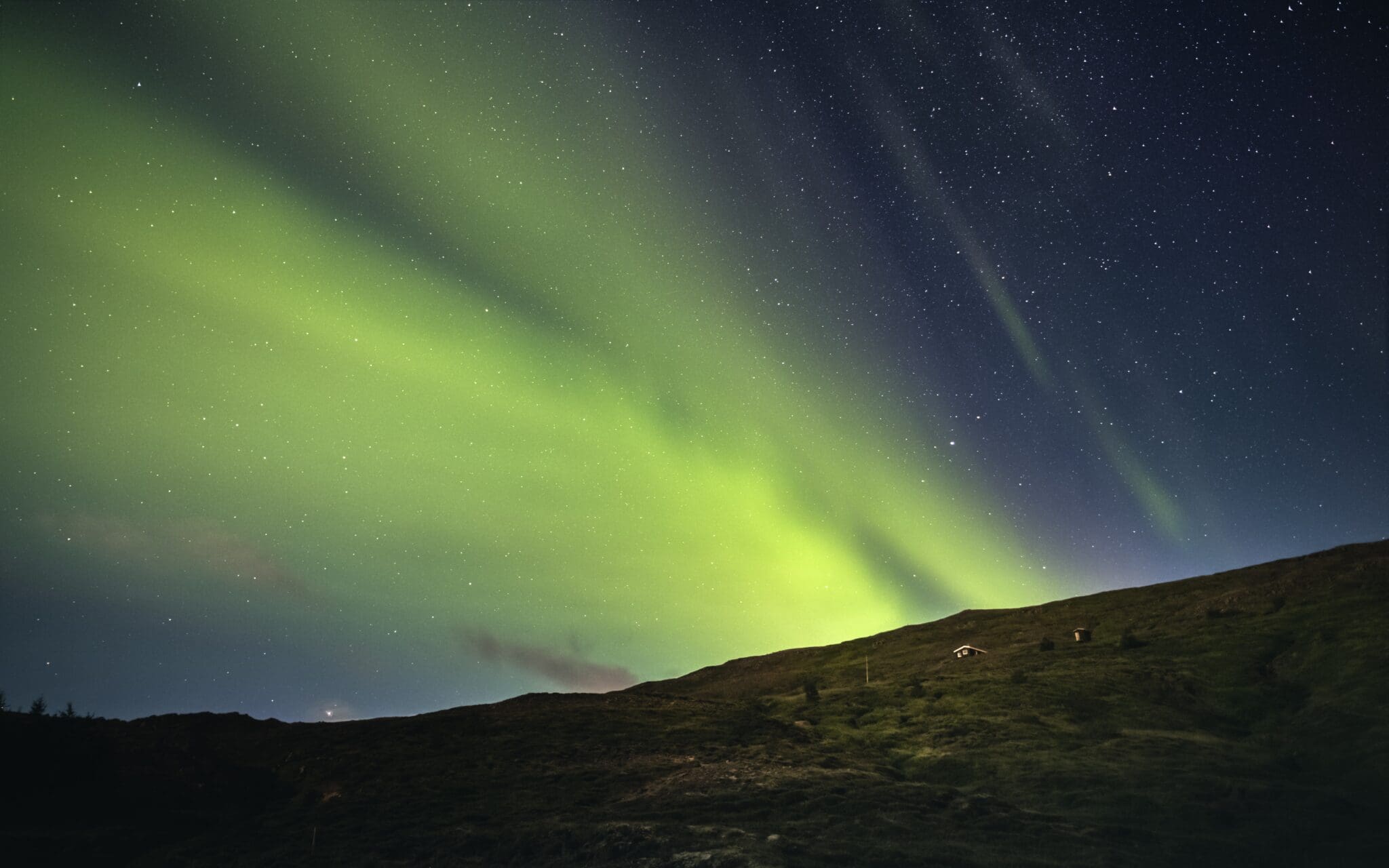
EspañolWill the northern lights appear over Iceland tonight? This live aurora forecast brings together the three things that matter — geomagnetic activity (the Kp index), cloud cover over Reykjavík, and whether it’s dark enough this time of year — into a simple verdict, plus a three-day outlook. Check it before you head out, and remember: the aurora is unpredictable, so clear, dark skies and a little patience go a long way.
Maximise your chances with a guided tour — our guides chase the clearest skies.
Activity data from NOAA SWPC · cloud cover from MET Norway (yr.no) · updated hourly.
The aurora is only visible when the sky is dark, so the season runs from roughly late August to mid-April, peaking in the long nights of autumn and winter. Between mid-May and late July the midnight sun keeps the sky too bright, so the lights can’t be seen — no matter how high the Kp index climbs. Activity is often strongest between about 9pm and 2am, but the aurora can appear any time it’s dark.
Get away from city light pollution and find an open view toward the north. Good options near the capital include the countryside around Þingvellir and the Golden Circle, the Reykjanes Peninsula and the rural south coast. On nights of strong activity you can even catch the lights from the darker edges of Reykjavík. Wherever you go, let your eyes adjust to the dark for 15–20 minutes and avoid looking at bright phone screens.
El Kp index (0–9) measures global geomagnetic activity — higher numbers mean stronger, more widespread aurora. But in Iceland’s high latitude, even a modest Kp of 2–3 can produce a beautiful display on a dark, clear night. Cloud cover is often the real deciding factor: a strong aurora is invisible behind thick cloud, so be ready to drive to a clearer patch of sky. Combine all three — darkness, clear skies and activity — for the best odds.
For the full background, see our complete northern lights guide and our guide to the best time to visit Iceland. Ready to chase the aurora? Browse our northern lights tours.
It depends on three factors shown above: whether it’s aurora season (late August to mid-April), how clear the sky is over your location, and the level of geomagnetic activity (Kp). When all three line up, your chances are good.
Because Iceland sits at a high latitude, even a Kp of 2–3 can produce a visible aurora on a dark, clear night. Higher Kp values mean brighter, more active displays, but clear skies and darkness matter just as much.
Activity is often strongest between about 9pm and 2am, though the aurora can appear any time the sky is dark. It’s worth checking the sky repeatedly through the evening.
From mid-May to late July, Iceland’s midnight sun keeps the sky too bright at night, so the northern lights aren’t visible even when geomagnetic activity is high. The season returns from late August.
Yes — cloud is often the biggest obstacle. A strong aurora is completely hidden behind thick cloud, so the best tactic is to stay mobile and head toward clearer skies when needed.