Recommended tour
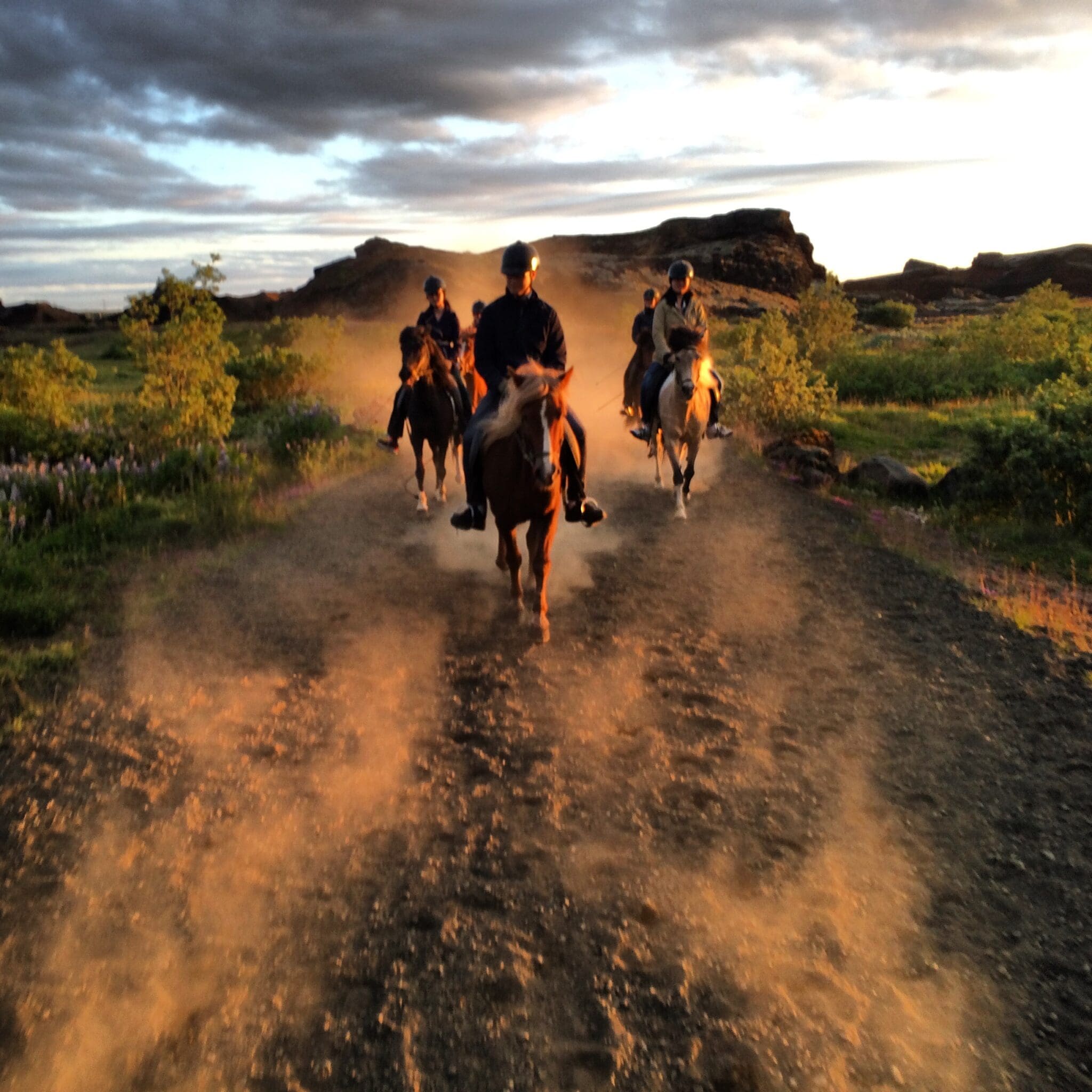
Volcanic Landscape – Riding Tour – afternoon tour
2 hours and 10 minutes
From ISK 18900

On August 12, 2026, Iceland will witness its first total solar eclipse in over 70 years. As the shadow of the moon sweeps across the dramatic cliffs of the Westfjords and the glaciers of Snæfellsnes, the “Midnight Sun” will vanish into a surreal midday darkness. From the best viewing coordinates to essential travel tips, here is everything you need to know to experience this once-in-a-lifetime celestial event in the Land of Fire and Ice.
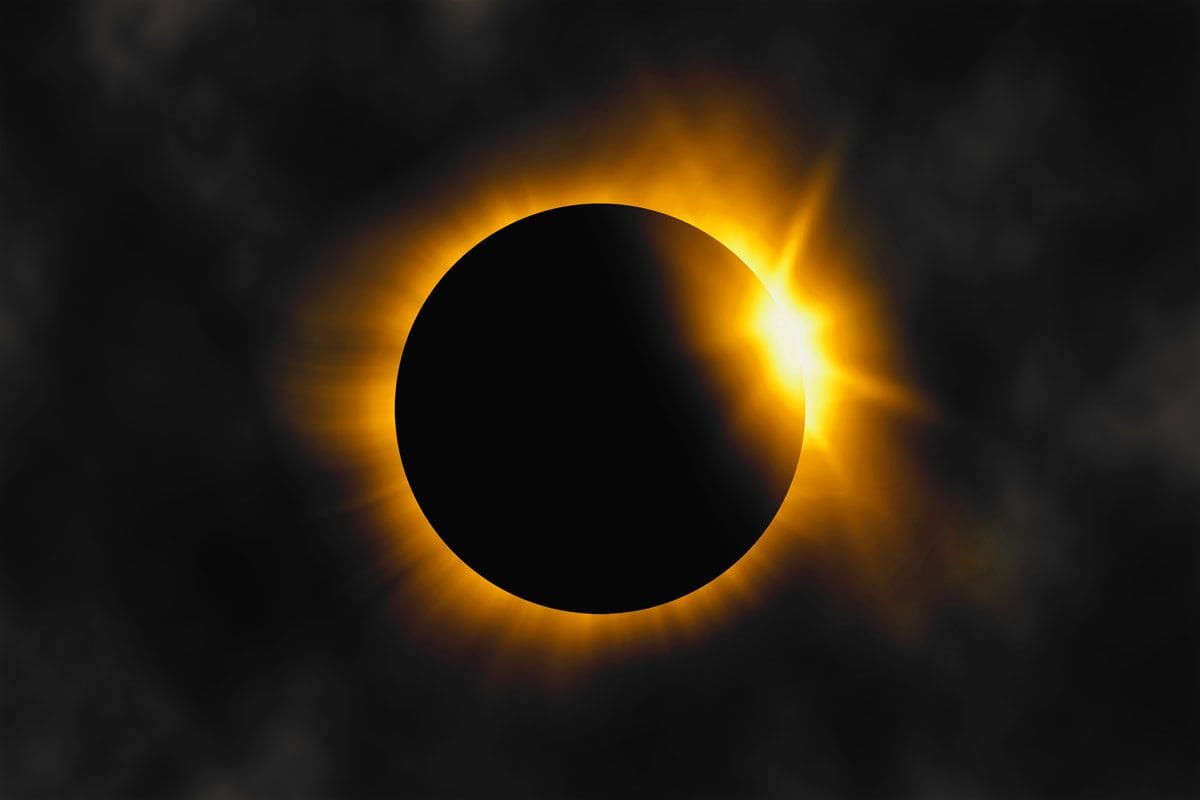
On 12 August 2026, Iceland will witness its first total solar eclipse in over 70 years. For a brief, breathtaking moment the Moon will completely cover the Sun, day will turn to dusk, and the Sun’s shimmering corona will appear in the sky above the land of fire and ice. This is one of the most extraordinary natural events you can ever experience — and western Iceland is one of the very best places on Earth to see it. Here’s everything you need to know to plan your eclipse day.
A total solar eclipse happens when the Moon passes directly between the Earth and the Sun, casting its shadow onto the Earth’s surface. Along the narrow central track — the path of totality — the Moon blocks the Sun entirely, revealing the Sun’s faint outer atmosphere, the corona. The temperature drops, birds fall quiet, stars and planets can appear, and a 360° “sunset” glows around the horizon. Outside the path you’ll only see a partial eclipse, where the Sun is never fully covered — a completely different (and far less dramatic) experience. To witness true totality, you must be inside the path.
The 2026 path of totality sweeps across western Iceland. The further west and the closer to the centre of the path you are, the longer totality lasts. Top viewing regions, roughly west to east:
Tip: aim for the centreline (Snæfellsnes/Westfjords) for the longest totality, and keep a clear view toward the low western sky.
All times are local Iceland time (GMT, no daylight saving):
Totality starts a little earlier the further west you are, and lasts longer toward the centreline. Check exact local times for your chosen spot closer to the day.
This is the single most important rule: looking directly at the Sun is dangerous and can permanently damage your eyes. You must wear certified ISO 12312-2 solar eclipse glasses (not ordinary sunglasses) during all the partial phases. The only time it is safe to look with the naked eye is during the brief moments of total coverage. The instant the Sun’s bright edge reappears, put your glasses back on. Never look at the partial Sun through a camera, phone, binoculars or telescope without a proper solar filter.
August in western Iceland is mild but the weather is famously changeable, and clear skies are never guaranteed. The single best strategy is mobility: be ready to move to a clearer location on the day. Watch the forecast and cloud-cover maps in the days and hours beforehand, choose a region with an open western horizon, and have one or two backup spots in mind along the path. Joining a guided trip takes this burden off you — local guides chase the clearest skies.
To shoot the partial phases you need a solar filter on your lens (the same protection your eyes need). During totality only — and only then — you can remove the filter to capture the corona. Use a tripod, a telephoto lens for a close-up of the Sun or a wide lens to capture the darkened landscape, and practise your settings in advance. Honestly, though: totality is fleeting, so spend at least part of it simply looking up and soaking it in.
An eclipse draws huge crowds, and Iceland’s western towns have limited beds. Accommodation and rental cars book out far in advance, so reserve early. Build flexibility into your plans for weather, expect busy roads on the day, and consider basing yourself somewhere you can reach multiple viewing areas. If you’re flying in, the airport transfers make arrival easy, and our tours and experiences can get you out to the best spots on the path without the stress of driving and parking. For broader trip planning, see our guide to the best time to visit Iceland.
Eclipse-chasers travel the world for moments like this, and Iceland offers a setting few places can match. Imagine totality unfolding above a glacier, a black-sand beach, a steaming lava field or the iconic Kirkjufell mountain — the darkened sky framed by some of the planet’s most dramatic scenery. August also brings mild weather, long evenings and Iceland’s full range of summer activities, so the eclipse can be the centrepiece of a longer adventure: whale watching, the Golden Circle, geothermal lagoons and the highlands are all in season. It’s a once-in-a-lifetime celestial event in a once-in-a-lifetime landscape — and after more than 70 years without one, Iceland won’t see another total eclipse for generations.
Make eclipse day effortless — explore our Iceland tours and experiences and get out onto the path of totality with a local guide.
Join Iceland Insider for new guides plus a heads-up when the aurora forecast looks good. No spam.
It takes place on 12 August 2026. In Reykjavík the partial eclipse begins around 16:47, totality occurs around 17:48, and the eclipse ends around 18:47 local (GMT) time.
Western Iceland is in the path of totality — the Westfjords (longest totality, up to ~2 min 13 sec at Látrabjarg), the Snæfellsnes Peninsula, the Reykjanes Peninsula and Reykjavík (near the edge, ~1 minute). Aim for the centreline and a clear western horizon.
Yes, but only just — Reykjavík sits near the southern edge of the path, so totality lasts only about a minute and clear conditions to the west are essential. For a longer, more reliable experience, head west onto the Snæfellsnes Peninsula or into the Westfjords.
It varies by location. Reykjavík gets roughly one minute; Látrabjarg in the Westfjords gets up to about 2 minutes 13 seconds, the longest on land. The greatest duration of all is just offshore, west of Iceland.
Yes. Wear certified ISO 12312-2 solar eclipse glasses during all partial phases. You may look with the naked eye only during the brief total phase, and must put the glasses back on the moment the Sun reappears. Ordinary sunglasses are not safe.
Clear skies aren’t guaranteed in August. The best tactic is to stay mobile and be ready to relocate along the path to clearer skies, using forecasts on the day. A guided tour is a good option, as guides will track conditions and head to the best spot.




Travel tips, new guides and a heads-up when the aurora forecast looks good. No spam.