Private North Iceland Waterfalls & Laufás Heritage Tour
210.990 ISK
5 horas y 30 minutos

Desafiante
349.000 ISK
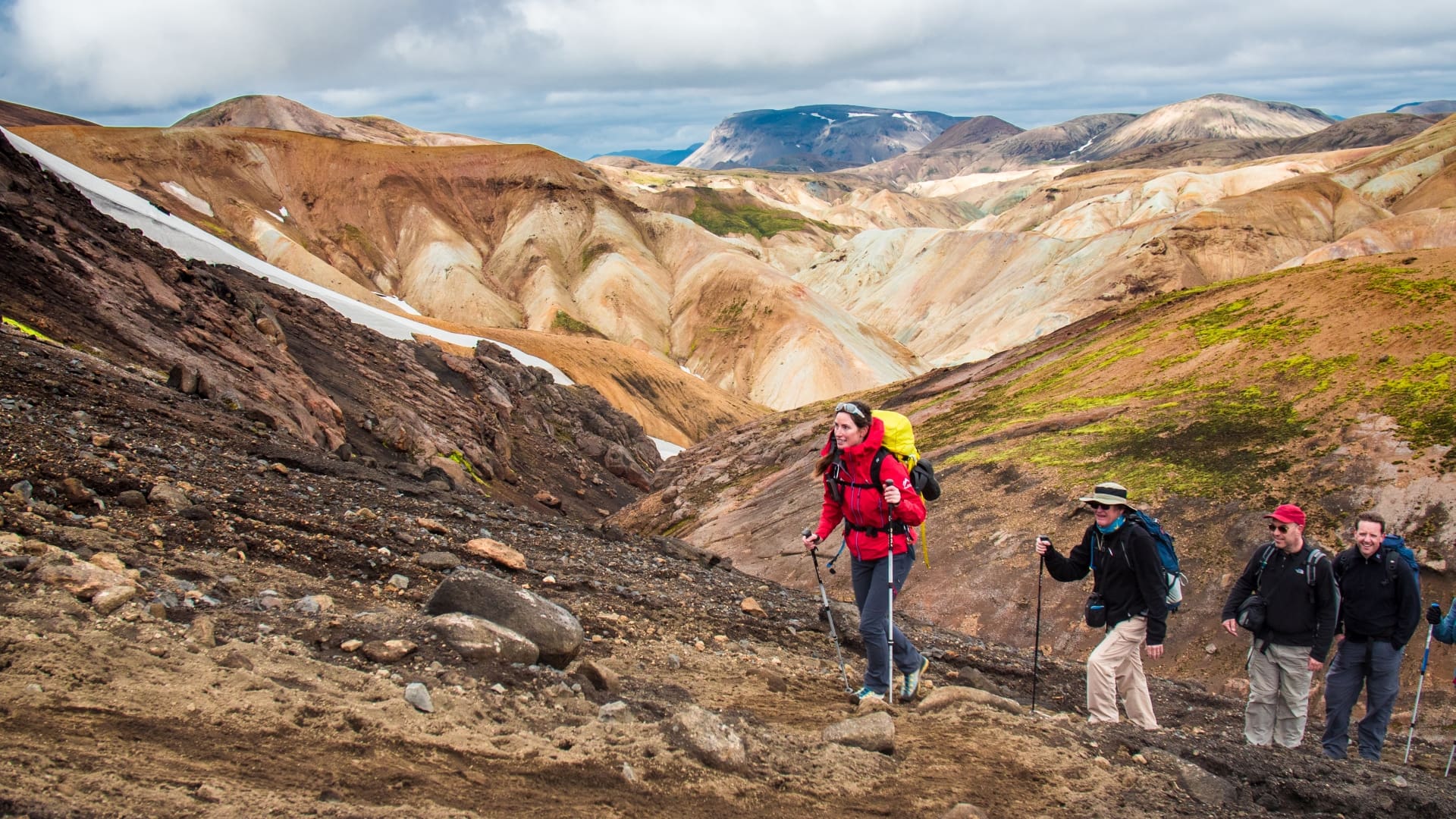
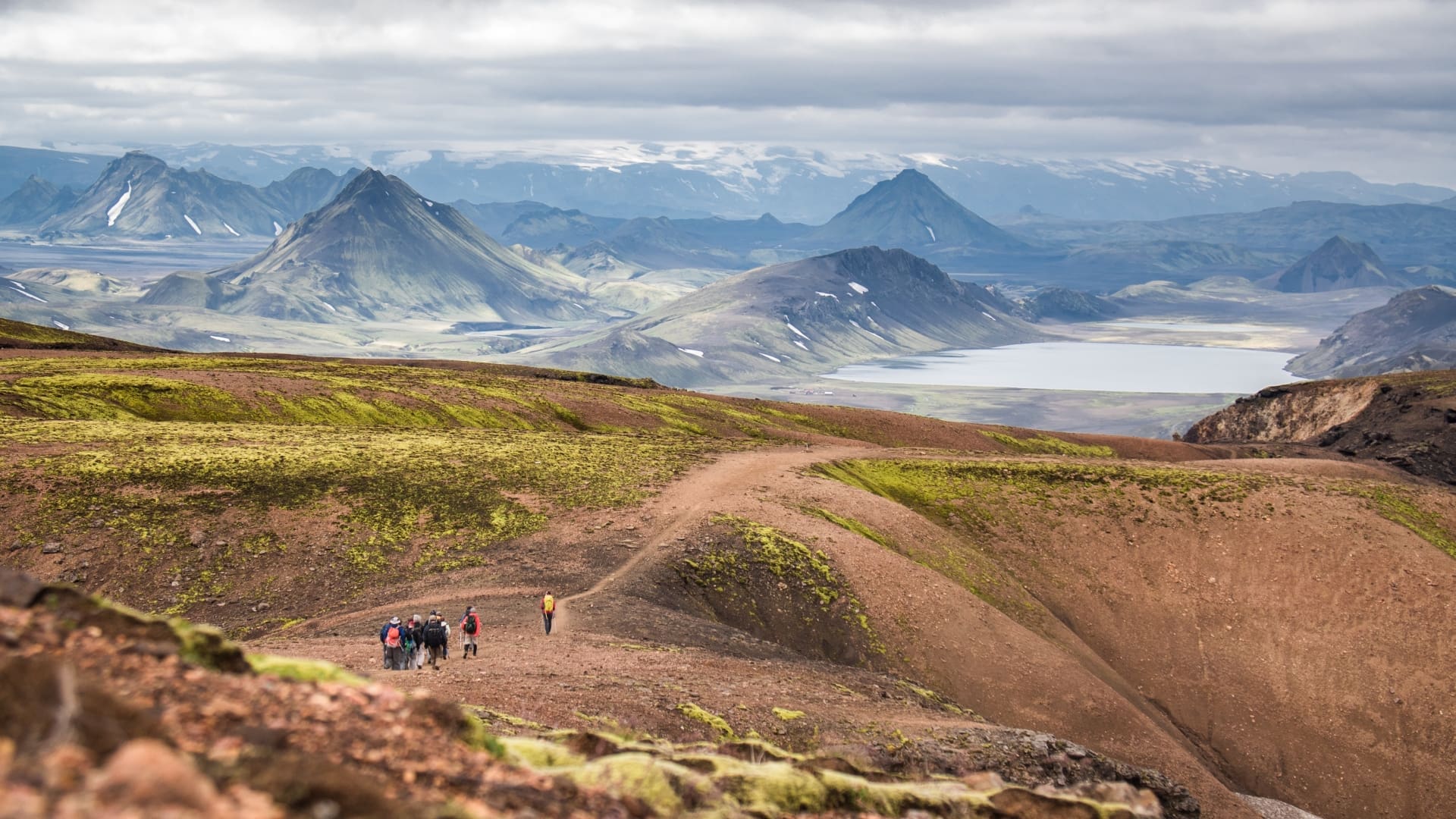
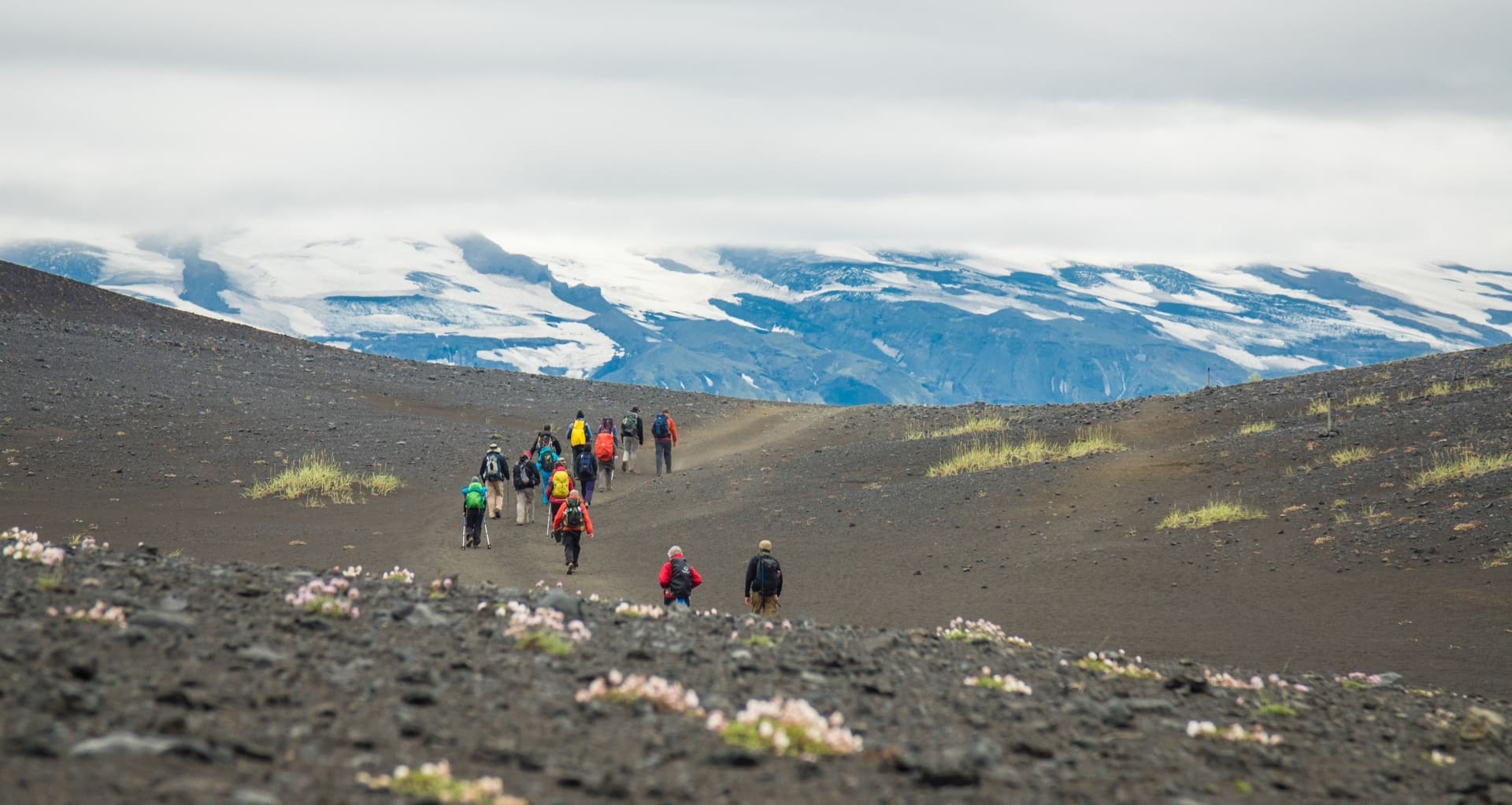
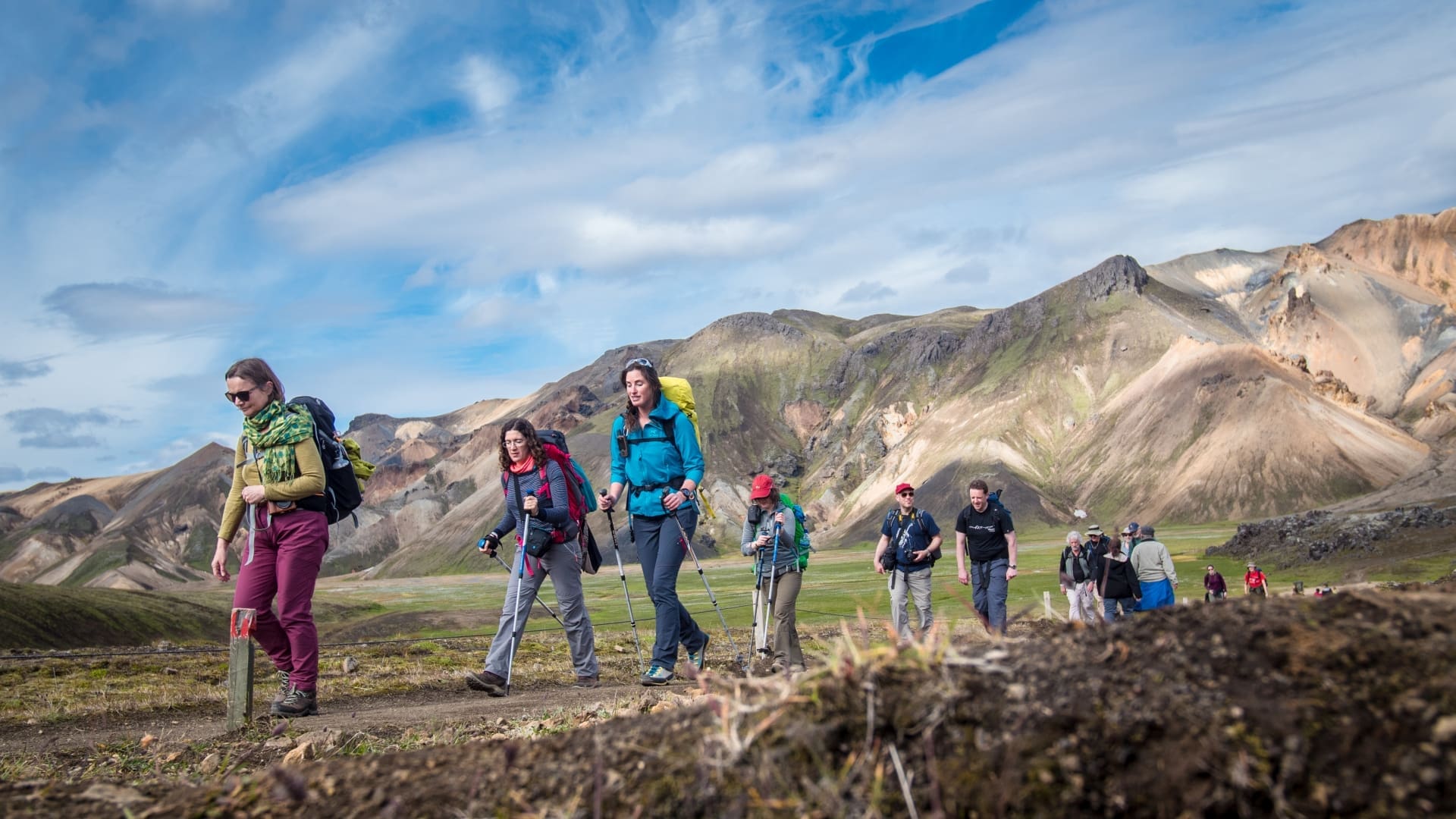
Hands down the best known trek in Iceland. This trail takes adventurers from the geothermal valley of Landmannalaugar and the southern highlands, over the southern highlands to the «órsmörk valley, at the foot of world famous Eyjafjallajökull volcano. The trail crosses many spectacles including the third biggest geothermal zone in the world, through yellow rhyolite mountains, over black deserts, past great canyons and finally into the verdurous valley of Þórsmörk. It is no coincidence that the “Laugavegur” hike each year attracts travellers from around the world in addition to being a great favourite amongst locals. Come see what all the fuss is about!
Trekking: 5 days Walking per day: 4-7 hours Total walking distance: 56 km. (35 miles) Altitude: 200-1100 m. (650-3600 feet) Maximum Ascent: 600 m. (1900 feet)
Day 1: Reykjavík – Landmannalaugar – Hrafntinnusker.
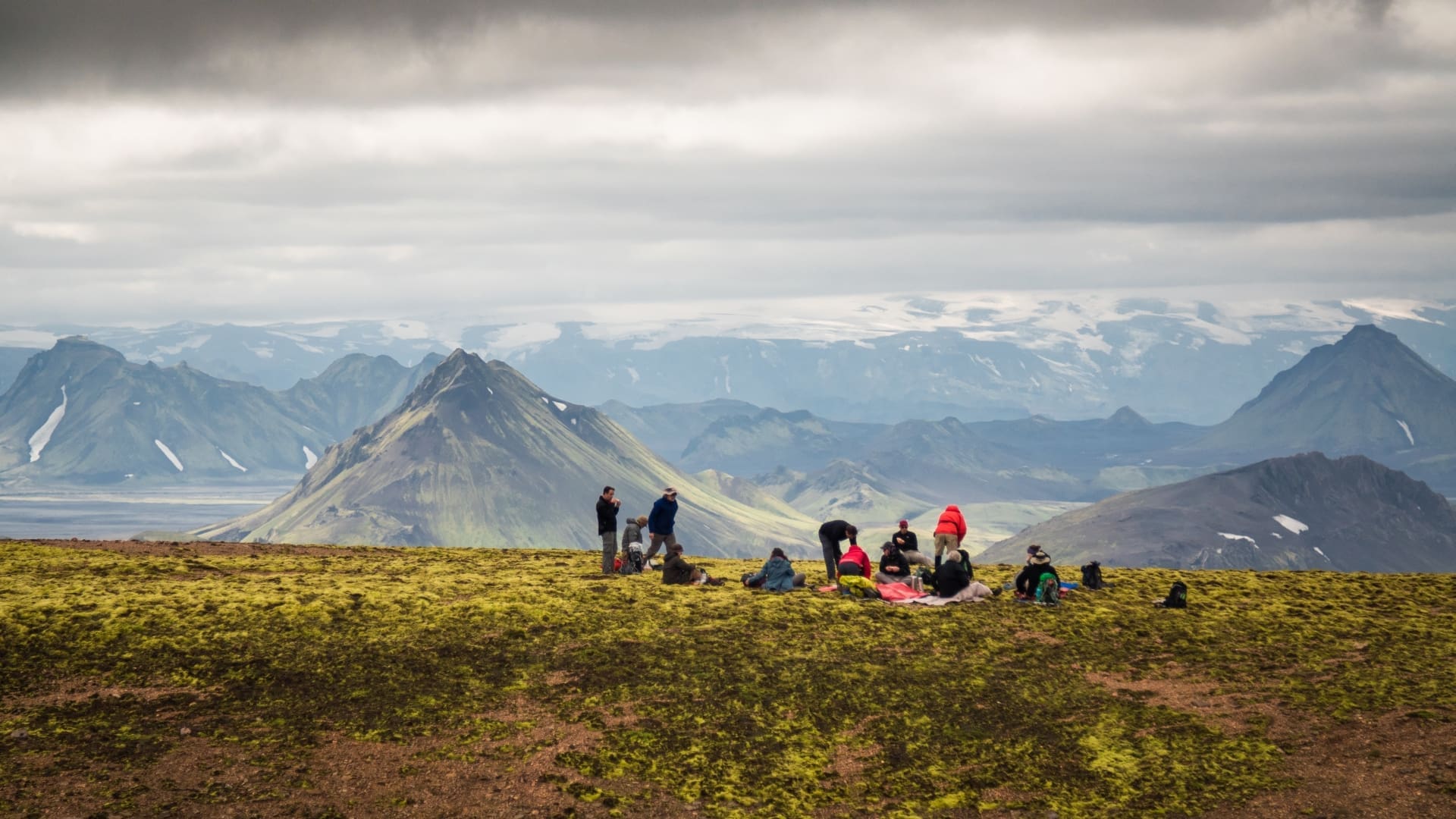
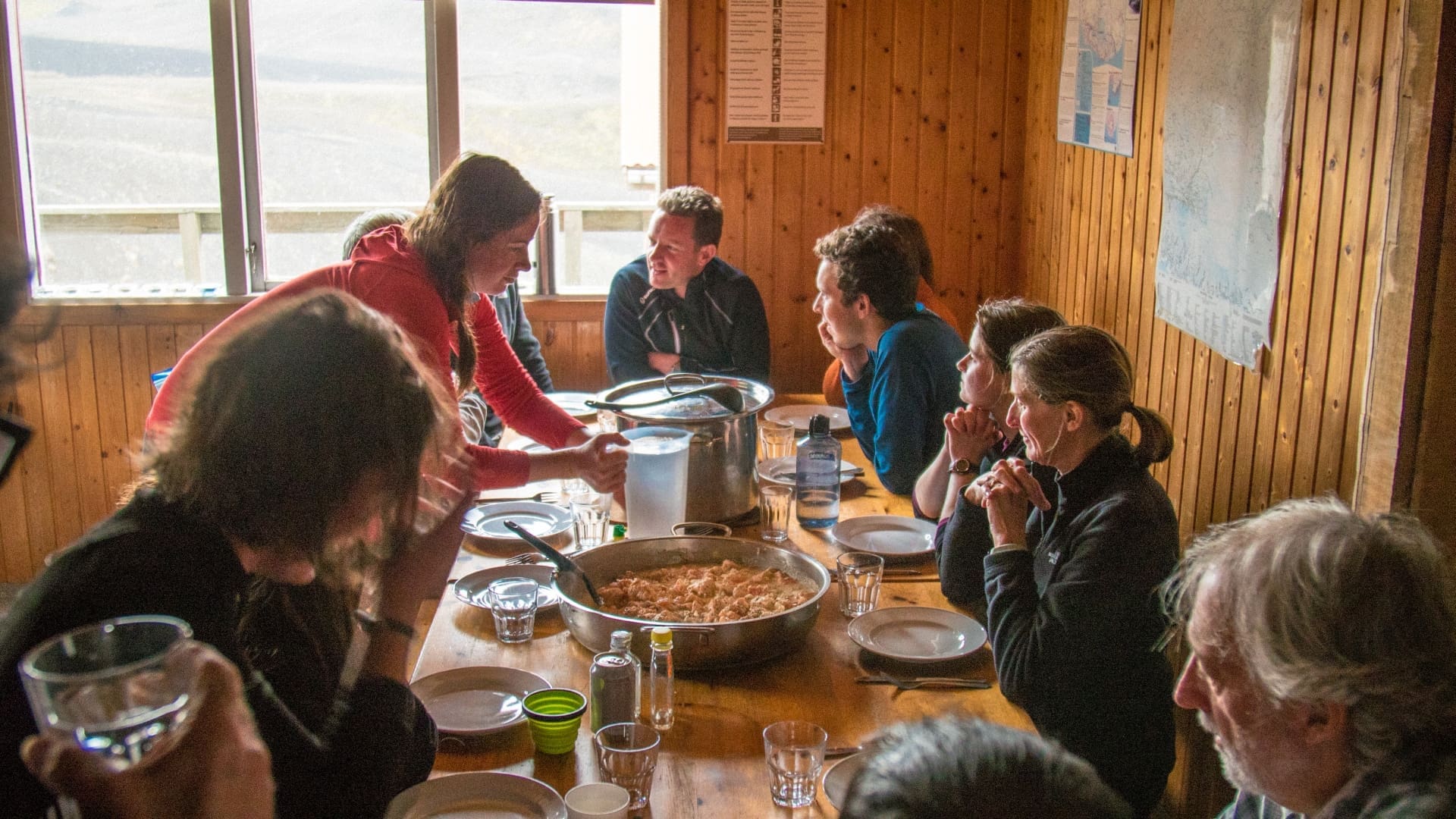
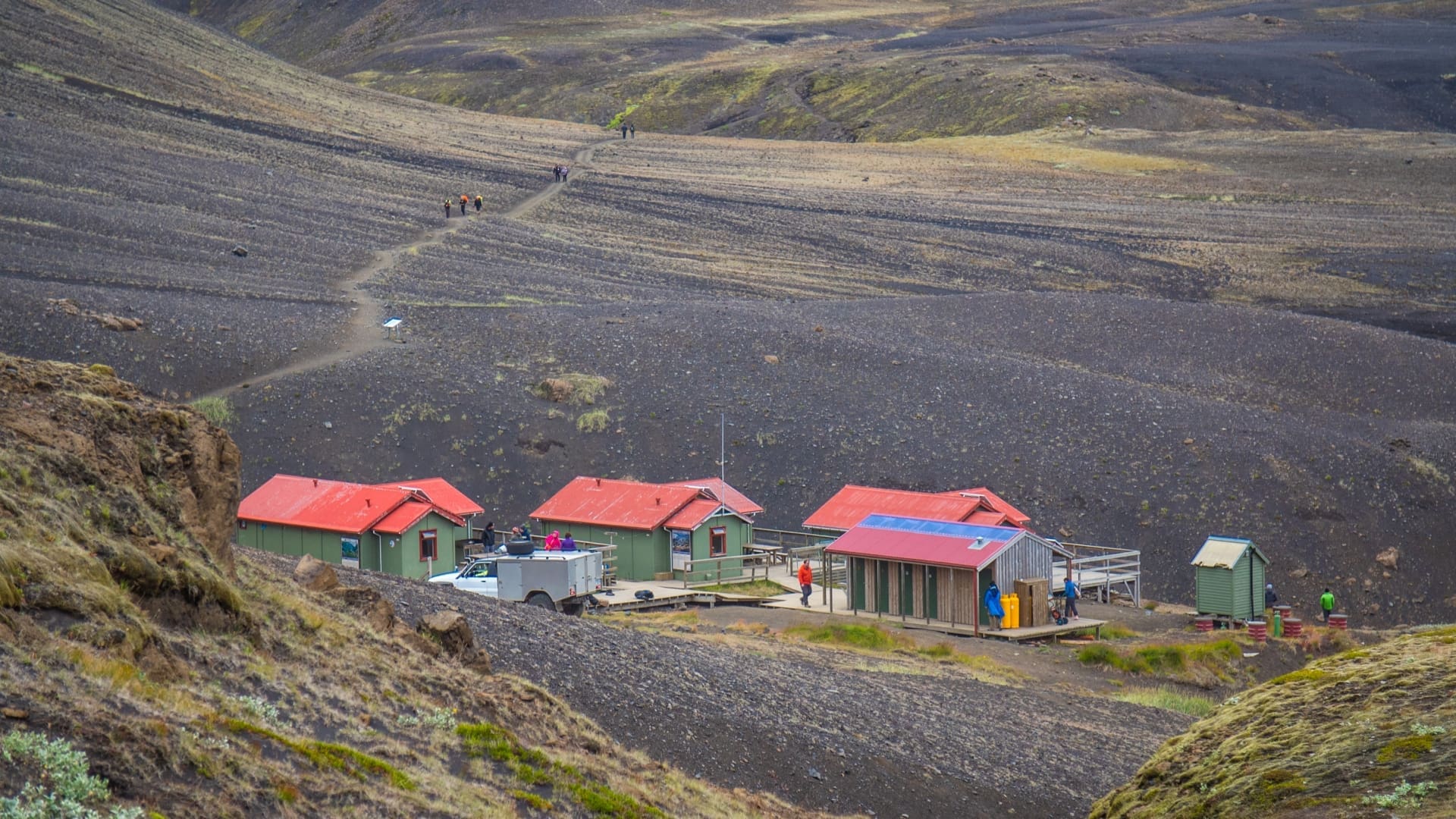
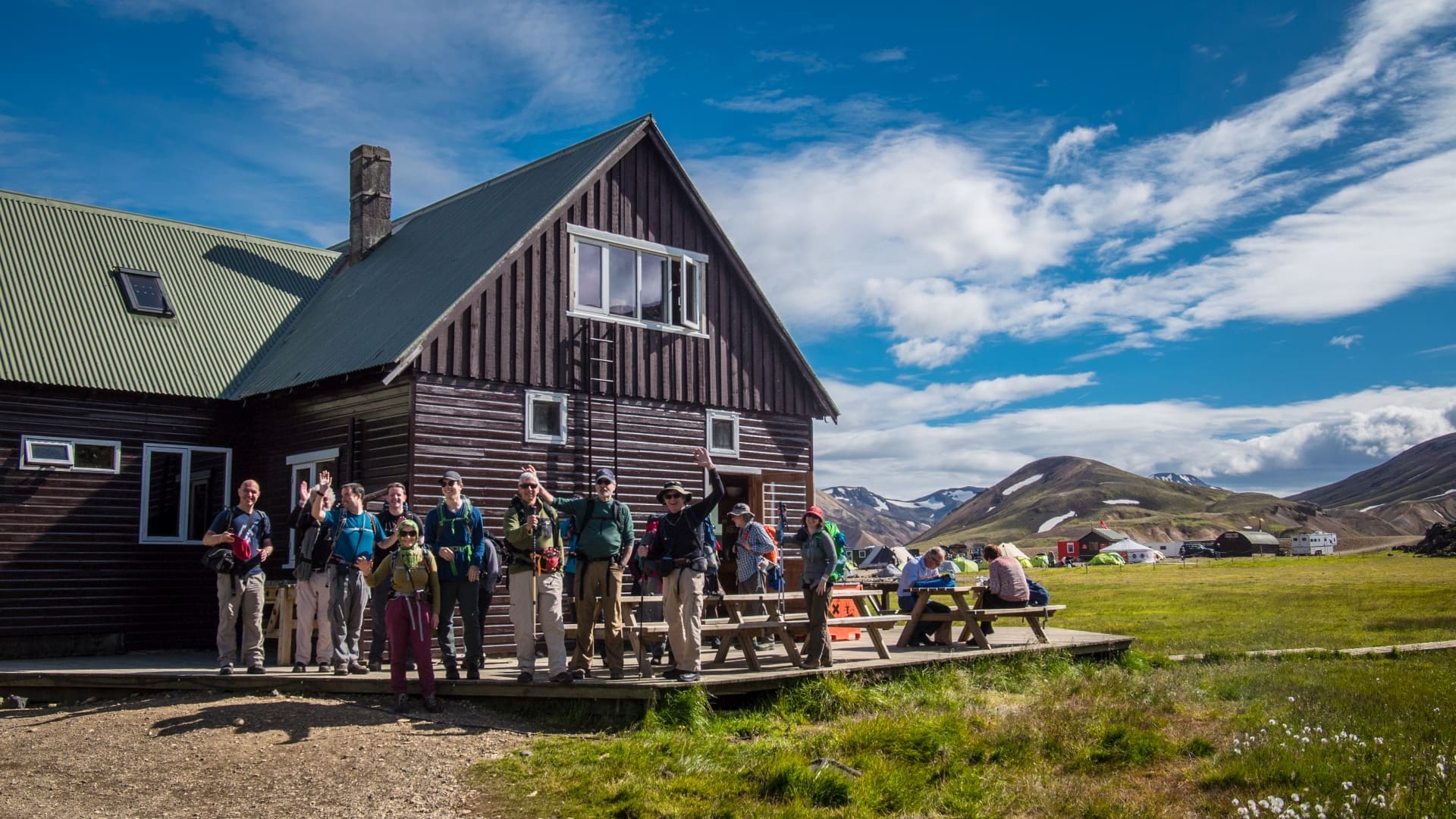
We take the scheduled bus from the BSI bus terminal at 07:00, that during the summer months drives the mountain tracks that lead to Landmannalaugar, passing by the Hekla volcano and other volcanoes in the Dómadalur area. Arriving in Landmannalaugar at noon, we have a lunch and then head south into the mountains. The trail takes us past small gorges, steaming hot springs and yellow mountain ridges. Arrival at Hrafntinnusker mountain hut, were we will stay the night, in the late afternoon.
Day 2: Hrafntinnusker – Álftavatn.
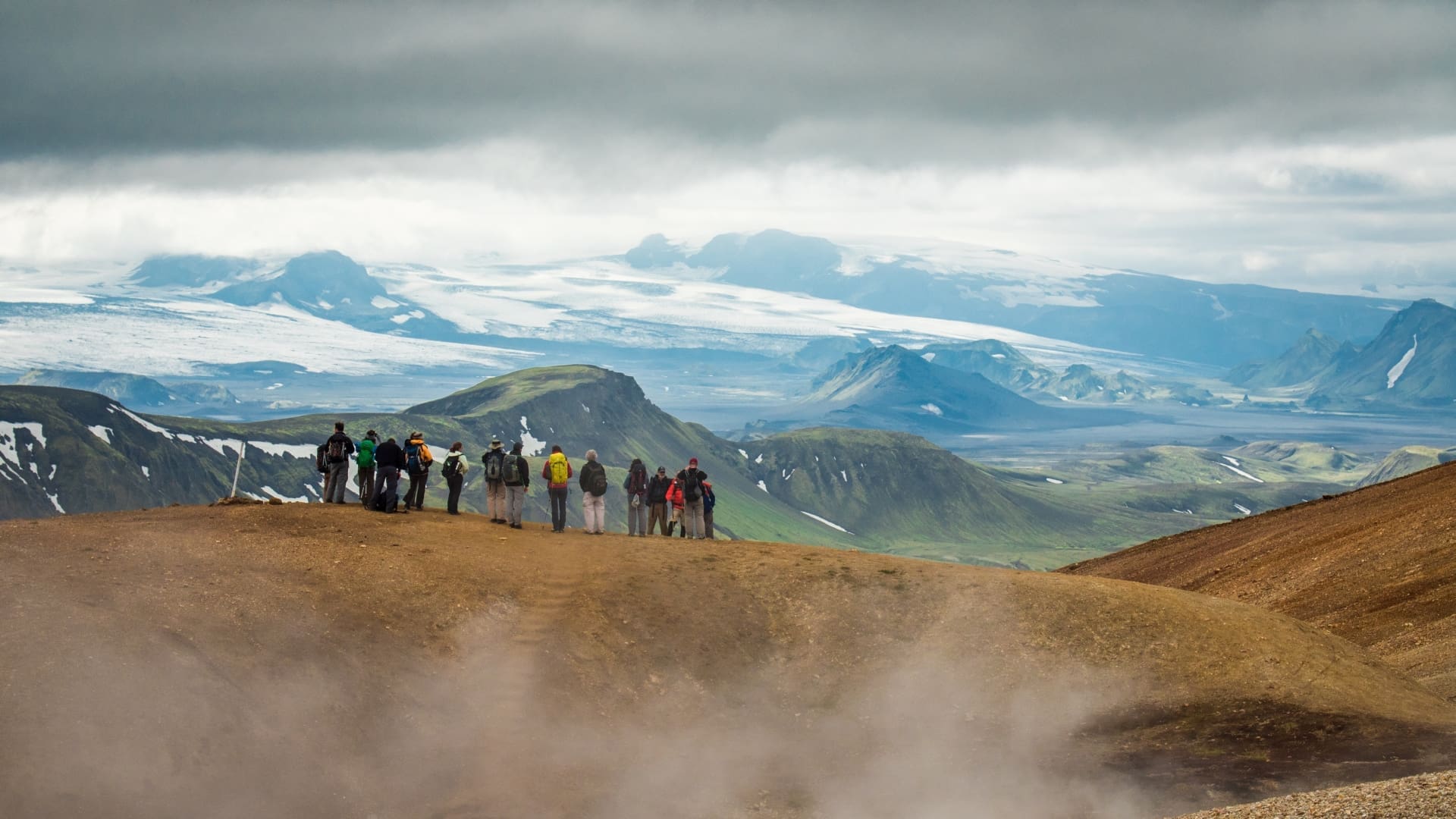
From Hrafntinnusker we descend down in the gullies of Jökultungur with hundreds of steaming hot springs and mud pools. Up there we enjoy fascinating views to the south to the Álftavatn area (Swan Lake), and the Mýrdalsjökull and Eyjafjallajökull glaciers. In the afternoon we arrive at Álftavatn hut where we stay the night.
Day 3: Álftavatn – Emstrur.
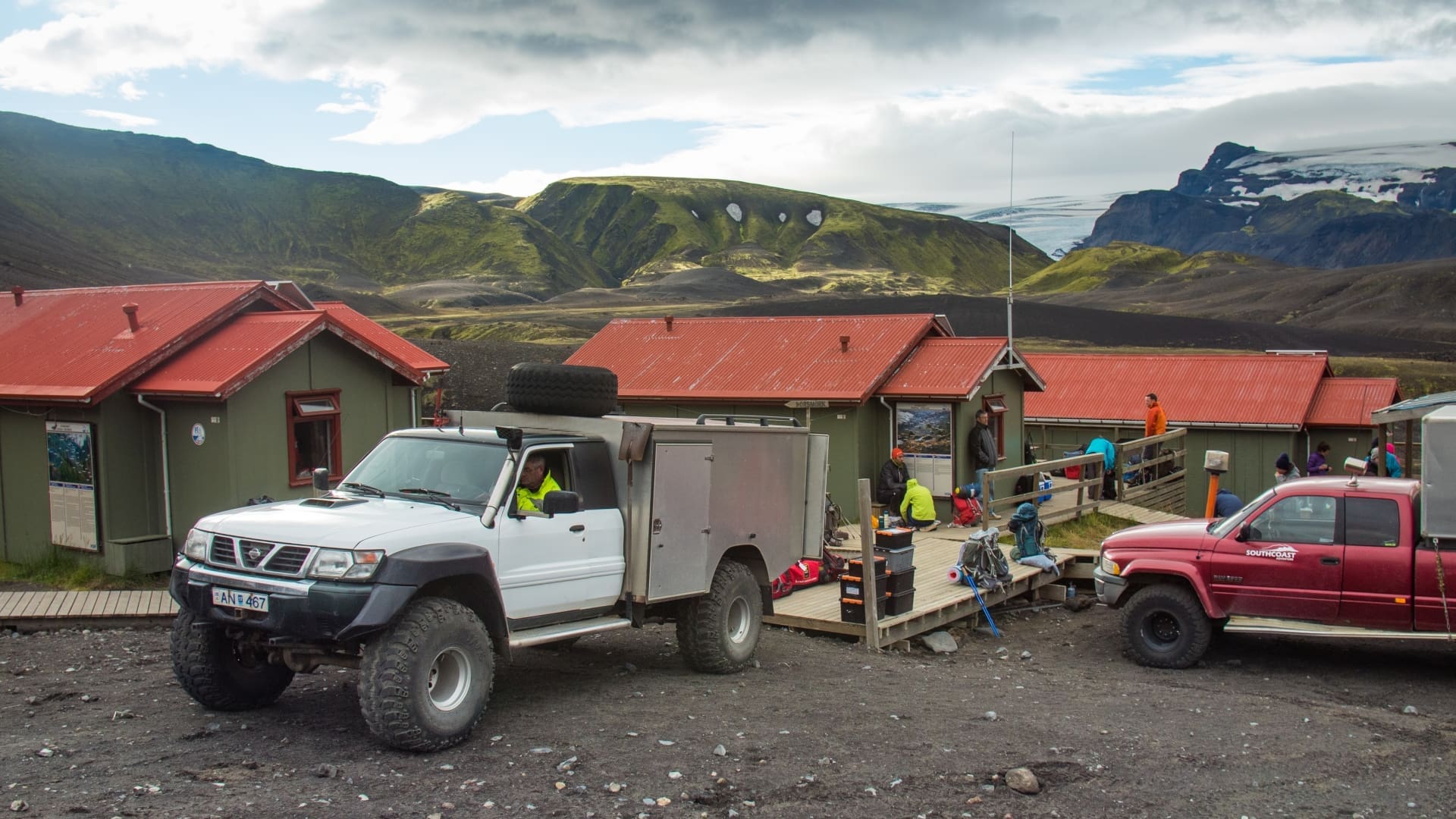
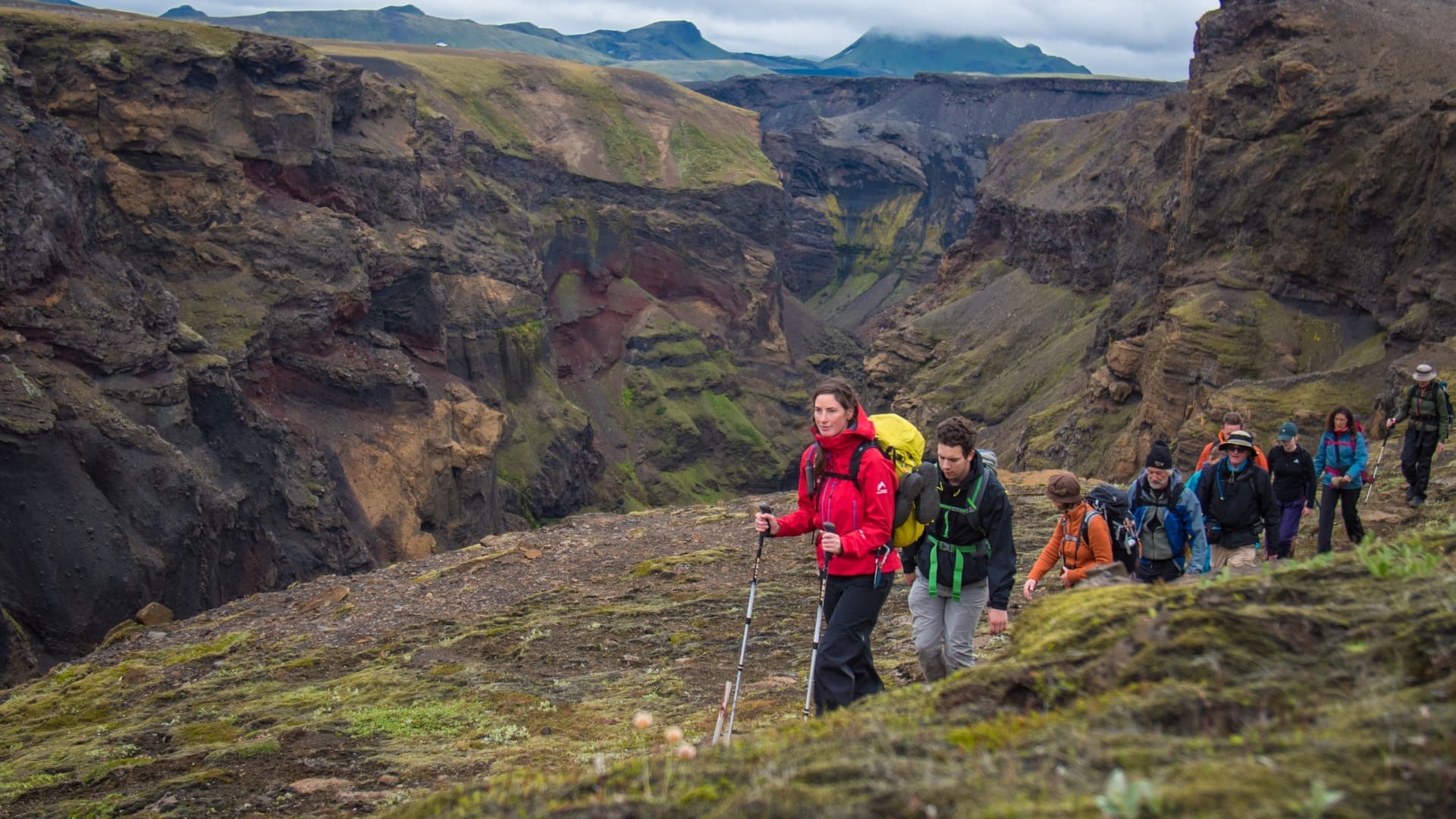
Pasamos al pie del verde volcán cónico de Stórasula antes de adentrarnos en los desiertos negros de Mælifellssandur. Dirigiéndonos hacia otro volcán antiguo y verduo, el Hattfell, entramos en la región de Emstrur donde los agricultores solían pastar sus ovejas en verano. Antes de llegar a la cabaña Botnar donde pastamos la noche, visitamos el magnífico cañón de Markarfljadot cortado a casi 200 m de las rocas al sur de Hattfell.
Day 4: Emstrur – Þórsmörk.
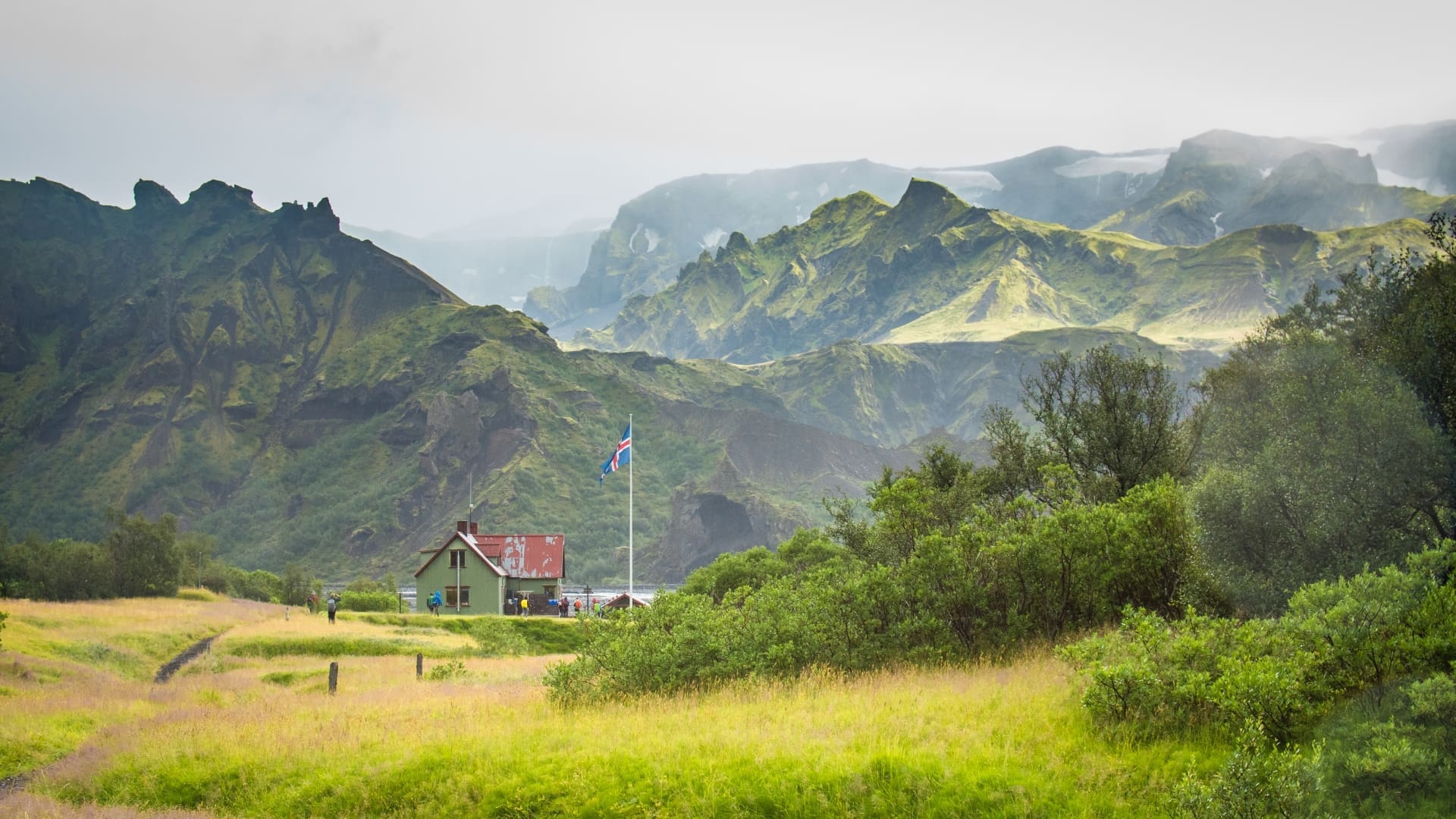
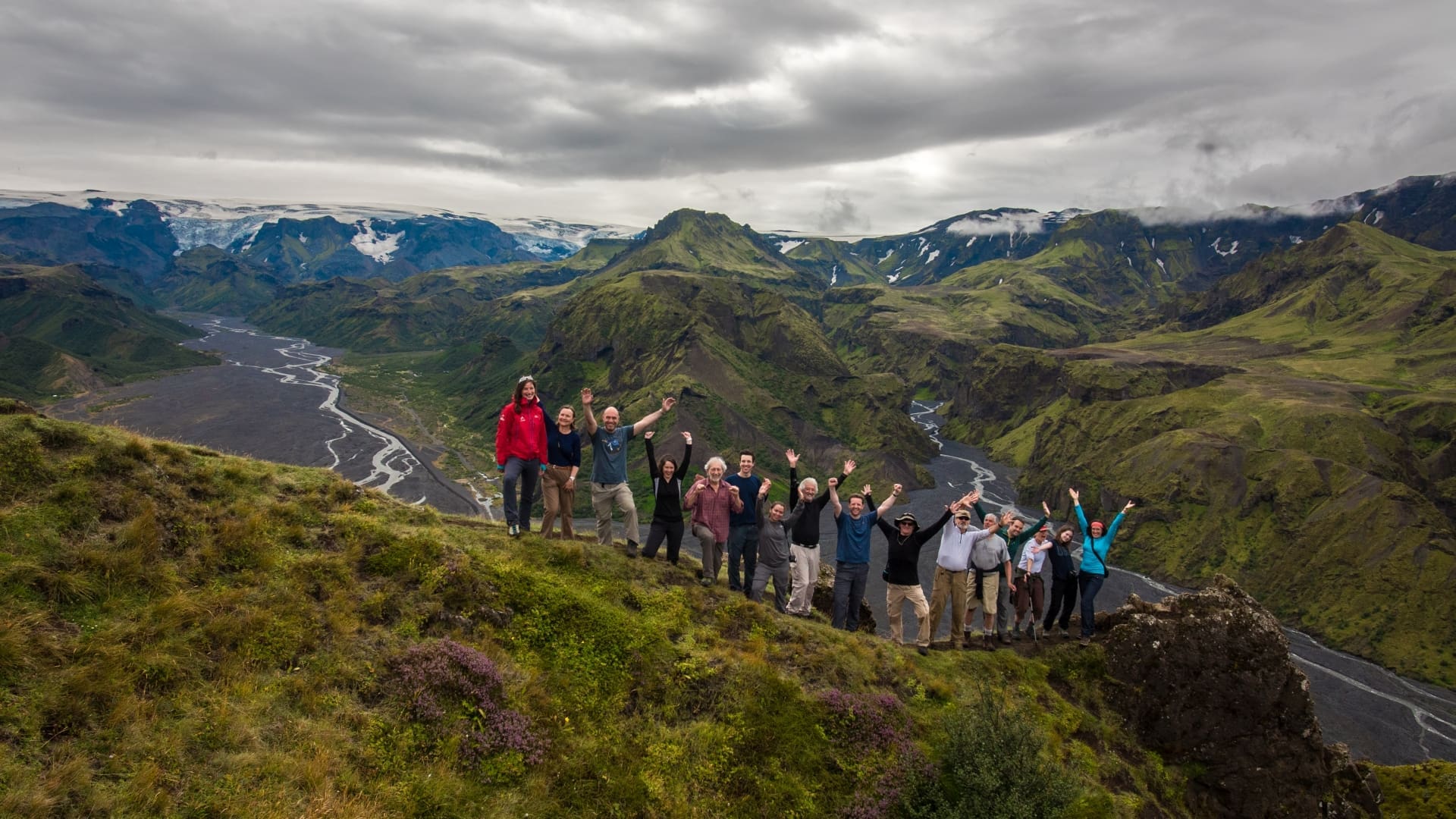
We continue up and down through the small valleys and gullies of Emstrur, where the great Mýrdalsjökull glacier rises only a couple of kilometers away. At the end of the day the vegetation starts to grow thicker and higher as we descend in to Þórsmörk's (the woods of Thor) green valleys filled with arctic birch forests and colourful flowers. Night in one of the huts in Þórsmörk.
Day 5: Bus from Þórsmörk to Reykjavík.
We spend the morning in Þórsmörk where we walk along one of numerous paths. For example, we can visit to the Sönghellir cave (“Song cave”), climb up the small mountain of Valahnúkur from where magnificent view can be enjoyed, before taking the afternoon bus to Reykjavík. Arrival at Reykjavik BSI bus terminal where the trip ends at 19:20
Botas y ropa
Robustas botas de senderismo ñame impermeables con buen soporte para los tobillos.
Camisa de manga larga (ropa interior térmica) ñona Lana o sintética.
Camiseta (ropa interior térmica) ñan Lana o sintética.
Jersey ligero de lana o lana (2a capa).
Pantalón - Material fuerte y ligero que se seca rápidamente, por ejemplo, de capa blanda.
Chaqueta con buena capucha 'resistente al viento, al agua y a la transpirabilidad, por ejemplo Gore-Tex o comparable.
Pantalón impermeable ñanero resistente al viento, al agua y a la transpirabilidad. Tenga en cuenta que en Islandia es obligatorio llevar equipo completo para la lluvia.
Guantes «lana o sintética 2 pares de diferente grosor.
Calcetines ñan Lana o sintéticos. Dos o tres pares.
Sombrero cálido ñu Lana o sintético.
Alte gear:
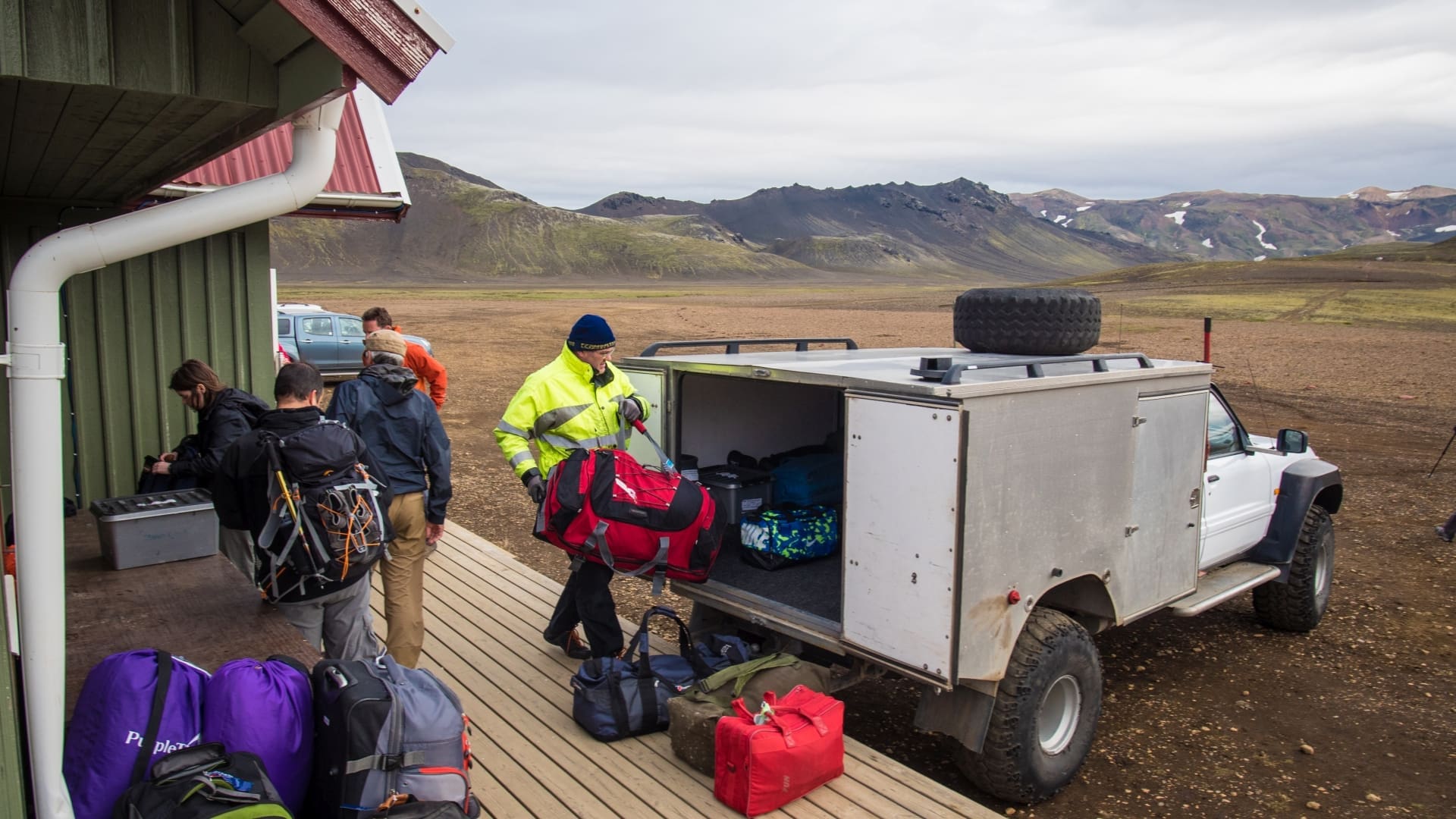
A duffel bag for the transport of your overnight gear between huts. ¡Evita traer una maleta!
Mochila para ropa extra y comida durante el día. 25 «40L (1500 «2500 cu in)
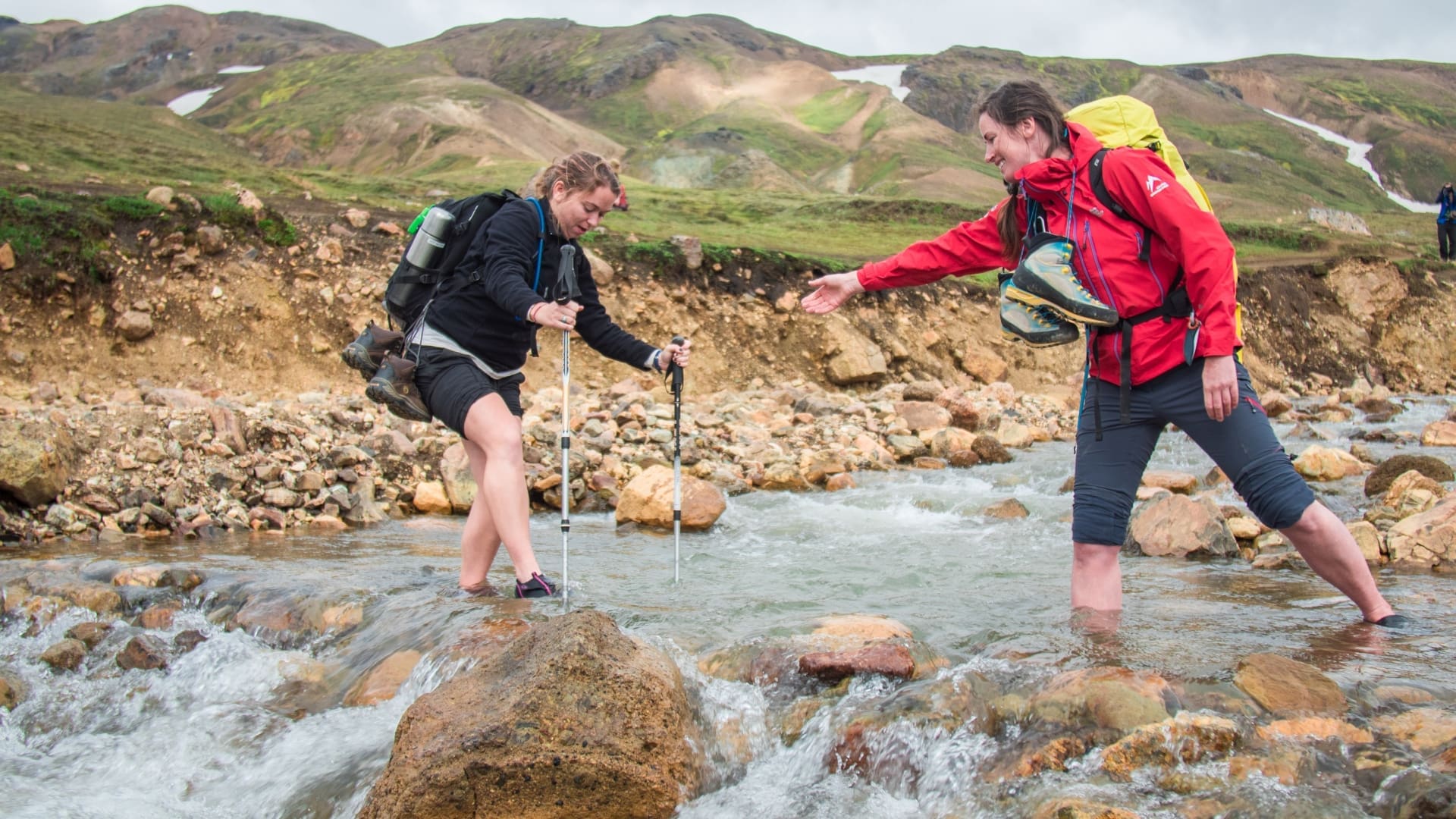
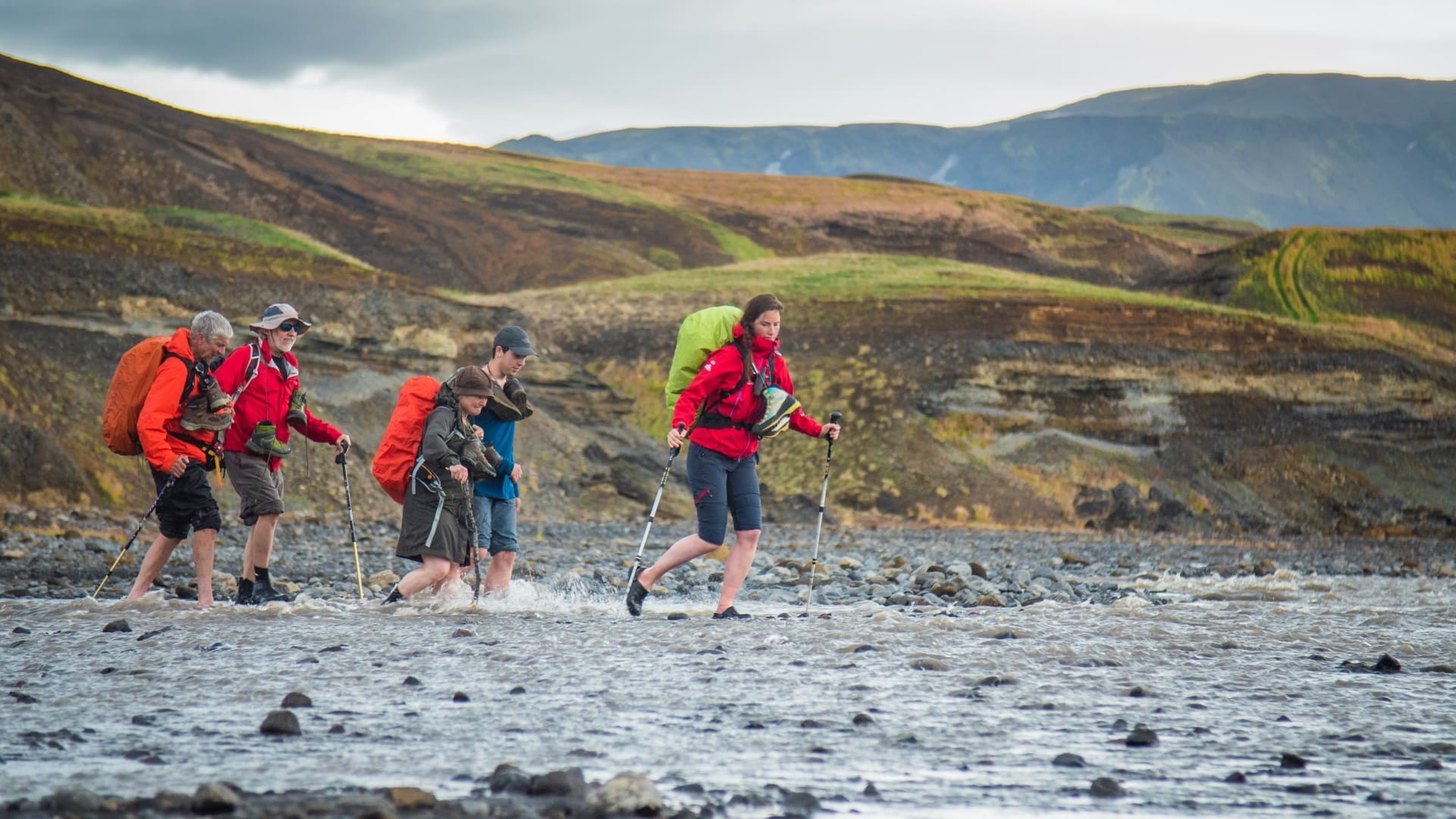
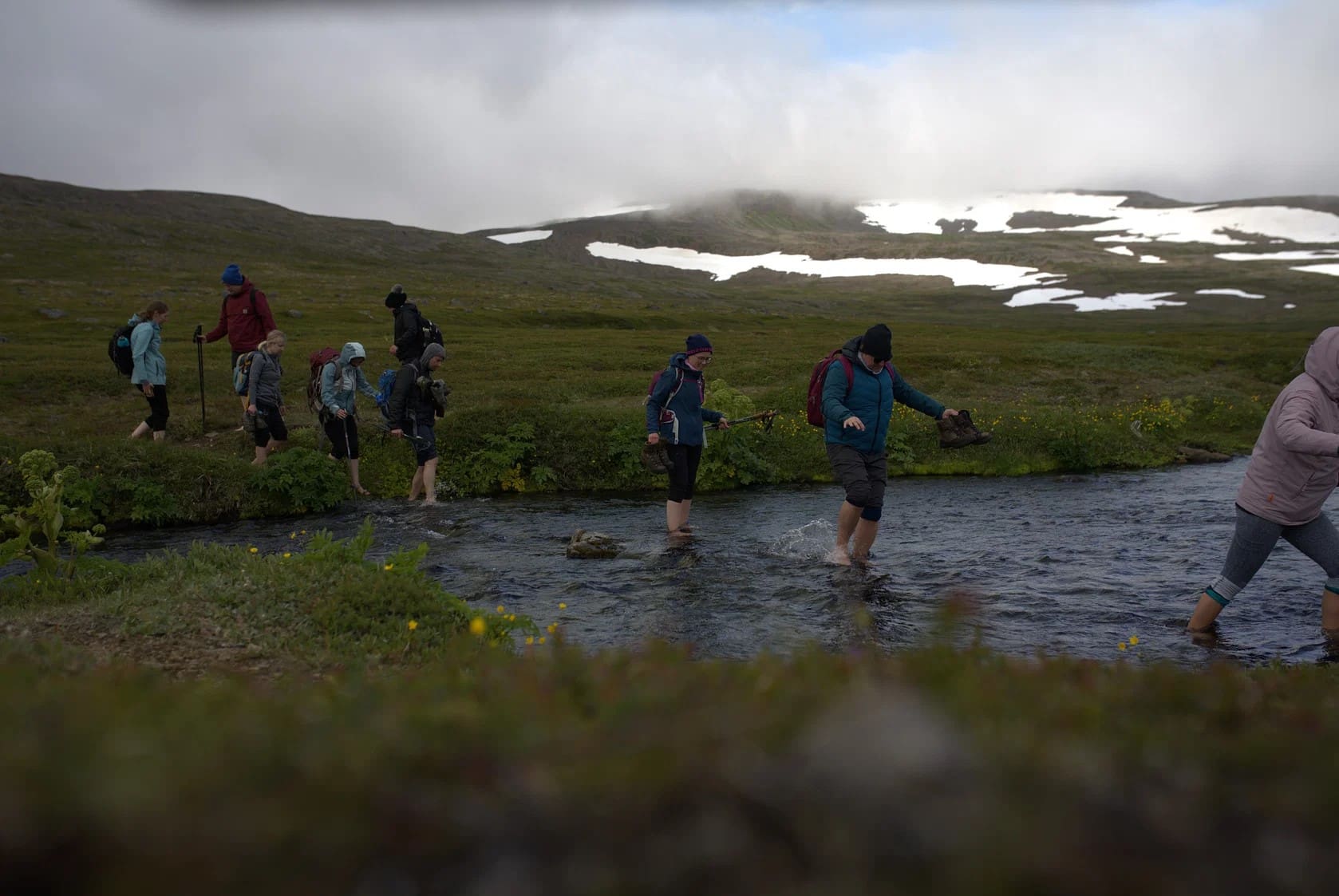
River shoes – Walking sandals or old running shoes with a good grip are a good choice, along with a pair of warm socks or neoprene socks. Open sandals or flip-flops will not do the job.
Saco de dormir ligero Toalla ñable ligero y plegable.
Gafas de sol y protección solar.
Recipiente de agua « termo matraz o botella de agua 0,5 « 1L.
Faro para leer y moverse por la cabaña.
Ropa informal / cambio de ropa para usar en la cabaña.
Botiquín personal de primeros auxilios «incluido el cuidado de ampollas.
Medicamentos recetados y otros artículos de salud personal.
Cepillo de dientes, pasta de dientes, jabón, etc.
Tapones para los oídos
Equipo opcional:
Bastón(es) para caminar.
Gaiters Neoprene socks – highly recommended for river crossings.
Cuchillo para bolígrafo.
Sombrero para el sol/lluvia o gorra.
Shorts Alfombra térmica (para la pausa del almuerzo).
Chaqueta hinchada (por ejemplo, Primaloft o abajo)
Cámara, pilas de repuesto y tarjeta de memoria o películas.
Bolsas secas para electrónica y ropa extra.
Zapatillas para uso interior.
Aperitivo u otros espíritus reconfortantes.
We take the regular bus from BSI bus terminal at 07:00, that during the summer months drives the mountain tracks that lead to Landmannalaugar, passing by the Hekla volcano and other volcanoes in the Dómadalur area. Arriving in Landmannalaugar at noon, we have a lunch and then head south into the mountains. The trail takes us past small gorges, steaming hot springs and yellow mountain ridges. Arrival at Hrafntinnusker mountain hut, were we will stay the night, in the late afternoon.
From Hrafntinnusker we descend down in the gullies of Jökultungur with hundreds of steaming hot springs and mud pools. Up there we enjoy fascinating views to the south to the Álftavatn area (Swan Lake), and the Mýrdalsjökull and Eyjafjallajökull glaciers. In the afternoon we arrive at Álftavatn hut where we stay the night.
Pasamos al pie del verde volcán cónico de Stórasula antes de adentrarnos en los desiertos negros de Mælifellssandur. Dirigiéndonos hacia otro volcán antiguo y verduo, el Hattfell, entramos en la región de Emstrur donde los agricultores solían pastar sus ovejas en verano. Antes de llegar a la cabaña Botnar donde pastamos la noche, visitamos el magnífico cañón de Markarfljadot cortado a casi 200 m de las rocas al sur de Hattfell.
We continue up and down through the small valleys and gullies of Emstrur, where the great Mýrdalsjökull glacier rises only a couple of kilometers away. At the end of the day the vegetation starts to grow thicker and higher as we descend in to Þórsmörk’s (the woods of Thor) green valleys filled with arctic birch forests and colorful flowers. Night in one of the huts in Þórsmörk.
We spend the morning in Þórsmörk where we walk along one of numerous paths. For example, we can visit to the Sönghellir cave (“Song cave”), climb up the small mountain of Valahnúkur from where magnificent view can be enjoyed, before taking the afternoon bus to Reykjavík. Arrival at Reykjavik BSI bus terminal where the trip ends.at 19:30
Please fill out our passengers information form.
210.990 ISK
49.360 ISK
39.490 ISK
39.490 ISK
58.740 ISK
58.728 ISK
65.240 ISK
290.000 ISK
309.320 ISK
328.028 ISK
Consejos de viaje, nuevas guías y aviso cuando el pronóstico de auroras se vea bien. Sin spam.